Chilli or Black Truffle Oil-Filled Popping Pearls? A Menu R&D Guide

Choose Chilli Oil-Filled Popping Pearls when a dish needs a distinct pepper aroma and a tingle on selected bites. Start with Black Truffle Oil-Filled Popping Pearls when you want the truffle aroma to come through with ingredients such as pasta, risotto or a soft egg. The choice starts with what you want diners to taste in the same bite as the pearl. The edible membrane holds flavored oil until the pearl is bitten. For a menu team, this makes placement part of recipe development. The same portion can land differently when it sits on a slice of meat, is spread across noodles or collects at the bottom of the plate. See both flavors in the LUZIE range.

Choose Oil-Filled Popping Pearls by the bite you want to create

R&D decision Chilli oil pearls Black truffle oil pearls
Sensory goal A distinct pepper aroma and tingle on selected bites An earthy truffle note that carries through the main ingredient
Dishes to trial Chilled noodles, pan-fried dumplings, grilled meat Pasta, risotto, soft egg dishes
First comparison Taste with noodles alone, then with noodles and a slice of grilled meat Taste with pasta alone, then with pasta and some of the egg or sauce

Chilli oil pearls for chilled noodles and grilled dishes

Start with a chilled noodle dish whose dressing already tastes balanced. Keep the dressing and portion the same across two plates. Place a measured portion of pearls on the sliced meat on one plate and across the noodles on the other. With the intended chopsticks or fork, see which placement brings the tingle into the bite you designed. If the dressing already contains Sichuan pepper, include a version with a lighter pepper base in a separate round of testing. [caption id="attachment_669" align="aligncenter" width="1024"]Chilled noodles with sliced grilled steak, cucumber and spring onion, garnished with Chilli Oil-Filled Popping Pearls Chilli oil pearls placed on the steak and across the noodles, so selected bites carry a pepper aroma and tingle.[/caption]

Black truffle oil pearls for pasta, risotto and egg dishes

Start with a pasta or risotto base seasoned lightly enough to let the truffle aroma come through. For pasta with a soft egg, try placing the pearls on the folds of the noodles near the egg. Taste before and after breaking the yolk to see whether it carries the aroma through the bite or makes it harder to pick out. If the final dish also uses truffle shavings or a strongly flavored cheese, add each in a separate trial so you can tell what it contributes. [caption id="attachment_670" align="aligncenter" width="1024"]Tagliatelle with a soft egg and shaved black truffle, finished with Black Truffle Oil-Filled Popping Pearls Black truffle oil pearls placed near the soft egg, so a forkful picks up the yolk, pasta and truffle aroma together.[/caption]

Test Oil-Filled Popping Pearls under actual service conditions

[caption id="attachment_671" align="aligncenter" width="1024"]Three plates of the same chilled noodle dish with steak set up for a side-by-side Oil-Filled Popping Pearls portion trial with a kitchen scale Plate the same dish side by side and weigh each portion of Oil-Filled Popping Pearls to compare results under service conditions.[/caption]
  1. Set a baseline and weigh the portions. Plate the same dish without pearls, with a smaller weighed portion and with a larger weighed portion. Keep the base recipe and pearl placement fixed. Record aroma, balance and texture before deciding on a portion.
  2. Test placement on the plate. Use the preferred portion to compare a cluster on one ingredient with an even distribution. Eat with the utensils guests will use. Check which bites pick up the pearls and whether any roll into the sauce or remain on the plate.
  3. Repeat at the kitchen pass. Plate at your normal serving temperature and record the time from plating to tasting. Check pearl integrity and visible oil release immediately and after the usual service interval. If the dish is served hot, start by trialing the pearls as a final garnish and confirm the SKU-specific handling guidance before testing them in cooking or a hot-holding step.
  4. Write a plating instruction another cook can follow. Record the selected portion, placement, when to add it and the conditions tested. Have a second cook plate a serving and compare the two plates before locking the recipe.

Discuss your Oil-Filled Popping Pearls menu trial with Tachiz

If you are developing a new menu item, share the base dish, serving temperature, typical time at the pass and the bite you want diners to experience. Contact Tachiz to discuss the relevant specification, sample options and application conditions.

Frequently asked questions

Which Oil-Filled Popping Pearls should I try for chilled noodles?

Start with chilli oil pearls if you want a pepper aroma and tingle. Keep the dressing constant and compare a measured portion on the protein with the same portion spread over the noodles.

How can I use black truffle oil pearls in pasta?

Trial them as a final garnish on a simply seasoned pasta. Place some where a forkful will pick up both pearls and pasta, then taste with the finished sauce or egg to assess the balance.

Can I add Oil-Filled Popping Pearls to a hot dish?

For a hot plated dish, start with a final-garnish trial at your intended serving temperature. Follow the product specification and verify pearl integrity over the actual service interval. Ask Tachiz about the specific product before testing it in cooking or hot holding.

How much should I use per serving?

Run a tasting with the same base dish and two weighed portions of pearls. Pick the smallest portion that gives the desired flavor in the intended bites, then record its weight and placement in the recipe.

How Small-Format Popping Boba Helped Tachiz Adapt During COVID-19

When COVID-19 disrupted physical retail and food-service channels, Tachiz expected demand for popping boba to fall. Instead, a shift toward e-commerce and supermarkets drove a surge in orders for its smaller retail packaging format. A product format that had previously sold slowly suddenly became a priority. Tachiz responded by mobilizing its team to support production, then investing in full automation for the small-format production line. That decision also opened the door to international e-commerce retail brands sourcing pre-packaged products for direct-to-consumer sales. For this popping boba manufacturer, adapting to the pandemic began with recognizing that actual demand was moving in a different direction from the original forecast.

When Demand Moved Beyond Food-Service Channels

At the beginning of the pandemic, the concern was straightforward: if physical outlets closed and food-service activity slowed, orders could decline. However, consumers were changing where they bought food. As purchasing shifted toward e-commerce platforms and supermarkets, Tachiz saw rising demand for smaller retail packs. The change mattered because packaging connects a product to its sales channel. A format designed for retail purchasing serves a different purpose from one supplied for commercial food preparation. For Tachiz, the smaller format became a way to respond to customers operating in the channels that were gaining demand. The opportunity emerged from an existing product format. The challenge was finding a way to produce enough of it.

Meeting the Surge Through Team Support

Tachiz’s first response was practical. Team members came together to support production and keep pace with the increase in small-format orders. This manual scale-up helped the company respond to immediate demand. It also brought a longer-term decision into focus: how should the production line develop if smaller retail formats continued to create new business opportunities? Relying on additional hands was the initial response. Building production capacity around the changing order mix became the next step.

Turning Demand Into a Production Automation Decision

Tachiz used the surge in orders as the trigger to invest in full automation for its small-format production line. The decision connected manufacturing investment to observed customer demand. Rather than waiting for purchasing patterns to return to their earlier shape, the company developed the production capability needed to support the growing retail format. This experience illustrates an important consideration in food manufacturing automation: the value of an investment depends partly on which products and packaging formats customers are ordering. For Tachiz, small-format popping boba had moved from a slower-selling format to a reason to upgrade the production line.

Opening the Door to International E-Commerce Clients

The shift also introduced Tachiz to a category of customers it had not previously served: international e-commerce retail brands sourcing pre-packaged, direct-to-consumer formats. These customers were looking for products suited to their retail business model. Packaging format therefore became part of the supplier conversation alongside the product itself. By responding to the rise in small-format demand and upgrading the corresponding production line, Tachiz expanded its opportunity to work with these brands. A change in consumer purchasing had led to a change in production priorities, followed by access to new customer channels.

What This Experience Means for Food Manufacturers

Tachiz’s experience offers three practical lessons for manufacturers navigating unexpected changes in demand.

1. Review Demand by Packaging Format

Overall demand can hide meaningful differences between products, pack sizes, and sales channels. A format that previously contributed relatively little may become more relevant when purchasing habits change.

2. Connect Immediate Action With Longer-Term Capacity

Team support can help a manufacturer respond quickly to a surge. The next decision is whether the demand warrants investment in a more sustainable production approach.

3. Treat Packaging as Part of Market Access

Packaging affects how a product fits a customer’s business. For retail and e-commerce brands, a pre-packaged format can be central to the sourcing requirement.

Building Around What Customers Actually Need

Tachiz did not anticipate the pandemic-driven surge in smaller retail packs. It recognized the change through incoming demand, mobilized its team, and used the experience to guide an automation investment. The result was a new direction for its small-format production line and opportunities with international e-commerce customers. For brands exploring retail-ready popping boba, the sourcing conversation should begin with the intended sales channel and packaging requirements. Contact Tachiz to discuss the format your business needs. [caption id="attachment_577" align="alignnone" width="491"]Small-format orange passion fruit popping boba sparkling beverage in retail glass Tachiz popping boba used in retail-ready sparkling beverages.[/caption]

Frequently Asked Questions

How did COVID-19 affect demand for Tachiz’s popping boba?

Tachiz initially expected demand to decline as physical retail and food-service channels closed. Instead, purchasing shifted toward e-commerce and supermarkets, driving a surge in orders for its smaller retail packaging format.

How did Tachiz respond to increased small-format orders?

Tachiz first mobilized team members to support production manually. It then invested in full automation for the small-format production line.

Did the packaging shift bring Tachiz new customers?

Yes. The shift opened opportunities with international e-commerce retail brands sourcing pre-packaged products for direct-to-consumer sales.

Why does retail packaging matter when sourcing popping boba?

Packaging helps determine how popping boba fits a sales channel. Retail and e-commerce brands need to discuss their intended format with the manufacturer as part of the sourcing process.   Want to learn more? Explore our popping boba products, mini boba and oil-filled popping boba, or contact Tachiz to discuss your project.

Beyond FSSC 22000: How Audit Transparency Builds Supplier Trust

When evaluating food ingredient suppliers, audit transparency is often the deciding factor between a basic certification on paper and a truly dependable partnership. While a food safety certificate confirms that a manufacturer has met compliance requirements, a full audit report helps buyers understand the actual findings behind that certificate and how effectively the supplier manages operational risks.

For international buyers and R&D teams sourcing popping boba, reviewing both documents provides comprehensive insight. A certificate defines the certified scope, but the underlying audit report reveals how the food safety management system operates day-to-day on the factory floor.

Reviewing audit findings alongside corrective-action records allows procurement teams to evaluate how a manufacturer identifies nonconformities, investigates root causes, and implements long-term preventive solutions. This level of audit transparency builds genuine confidence when selecting a global manufacturing partner.

Why Tachiz Chose FSSC 22000 from the Start

When Tachiz established its food safety management system, it pursued FSSC 22000 directly rather than first obtaining standalone ISO 22000 certification. FSSC 22000 combines ISO 22000 requirements, sector-specific prerequisite programmes and additional scheme requirements. Tachiz’s decision helped the team build these requirements into daily operations from the beginning. Fresh fruit yogurt bowl topped with mango popping boba pearls and blueberries by Tachiz

The Audit Report That Strengthened Buyer Confidence

In discussions with a major US food manufacturer, Tachiz’s willingness to share its audit report became an important factor in building trust. The report provided visibility into nonconformities identified during the audit and the corrective actions taken. It gave the buyer a clearer understanding of how Tachiz responded to problems and managed improvement. For Tachiz, transparency means making food safety practices and follow-up actions visible. When evaluating a food ingredient supplier, reviewing the certificate alongside audit findings and corrective-action records can support a more informed decision.

Mango mousse dessert cup garnished with orange popping boba pearls and fresh mint by Tachiz

Quick FAQ

What is FSSC 22000? FSSC 22000 is a food safety management system certification. How does an audit report differ from a certificate? A certificate confirms certification status and scope. An audit report provides details about the assessment, including findings and identified nonconformities. Corrective-action records explain how those issues were addressed. Why does Tachiz share its food safety audit report? Tachiz shares its audit report with customers to provide visibility into audit findings and corrective actions, supporting supplier evaluation and long-term trust.   Partner with a Trusted Popping Boba Manufacturer  

Tachiz: A Taiwan Popping Boba Manufacturer Turning Innovation into New Food Applications

A pearl small enough for a regular straw. A burst of flavored oil on a seafood dish. These applications show how popping boba technology can create possibilities beyond a familiar beverage topping. Tachiz Enterprise Co., Ltd. is a Taiwan popping boba manufacturer founded in 2015 and based in Tainan. Through research, equipment development, and process improvement, the company has expanded from OEM food-ingredient manufacturing into mini popping boba, oil-filled pearls, and brand development. Featured in Issue 703 of Trade Insight, published on September 30, 2026, Tachiz’s story explores how manufacturing expertise can support new products and stronger connections with international buyers.

What Is Popping Boba?

Popping boba consists of liquid enclosed within a thin, edible membrane that bursts when bitten. Its production uses spherification technology, involving interactions between sodium alginate and calcium to form the surrounding membrane. This structure gives food developers a way to combine texture with a distinct moment of flavor release. Applications can extend from beverages and desserts to savory dishes, depending on the filling and product design.

From a Market Need to Reliable Manufacturing

Tachiz’s manufacturing journey began with an observation from international trade. Some overseas beverage businesses had limited kitchen space and could not easily install the equipment needed to cook traditional tapioca pearls. Buyers were looking for alternative ingredients that suited their operations. Meeting that need required more than developing a recipe. Factory-produced popping boba must maintain consistent quality through production, sterilization, transportation, and storage. Membrane integrity, texture, and stability all require careful process control. Tachiz built its manufacturing capabilities around these challenges, connecting product R&D with equipment engineering and quality management.

Equipment Development Supports Product Differentiation

Tachiz leads the design, testing, and improvement of its popping boba equipment. This approach has helped the company develop products containing natural materials such as fruit pulp, seeds, and flower petals, such as dragon fruit popping boba that retains its seeds and rose-flavored popping boba with visible petal texture. For product developers, these details offer opportunities to differentiate an ingredient through its appearance and texture as well as its flavor.

Mini Popping Boba for Cafés and Desserts

Straw diameter became another starting point for innovation. Tachiz developed smaller popping boba, approximately 4–5 mm in diameter. According to the feature, these smaller pearls have attracted interest from European cafés and dessert businesses. Mini popping boba offers another format for teams exploring how a liquid-filled ingredient can fit into their serving style. For a specific application, buyers should evaluate the pearl size alongside straw dimensions, beverage consistency, and the intended eating or drinking experience.

Mini popping boba served on waffles with Tachiz logo packaging

Oil-Filled Pearls Bring Flavor Release to Savory Food

Tachiz has also extended its encapsulation expertise to flavored oils. The feature describes development involving chili oil, truffle oil, and olive oil. Oil-filled pearls can be used in salads, seafood, appetizers, and refined dishes, introducing a concentrated release of flavor when bitten. This expands the role of the technology from sweet beverage toppings to culinary ingredients. Tachiz is also collaborating with Taiwanese vegetarian food businesses on plant-based salmon roe concepts, contributing encapsulation technology while partners develop flavor profiles. Tachiz oil-filled pearls and plant-based caviar application on savory burger

Brand Development Builds on OEM Expertise

As Tachiz developed its own brands, the company sought to make its technical capabilities and business philosophy easier for buyers to understand. The article reports that many existing OEM customers responded positively to continued investment in R&D and brand development, strengthening their relationships with Tachiz. Brand building became a way to communicate the expertise behind the products and the company’s commitment to long-term cooperation.

Explore Your Next Food Application with Tachiz

As an experienced Taiwan popping boba manufacturer, Tachiz connects practical culinary needs with advanced spherification engineering and OEM manufacturing. For importers, distributors, and food brands considering a new ingredient, a useful starting point is the intended application: what flavor, texture, size, and serving format should the product deliver?

Frequently Asked Questions

What is Tachiz?

Tachiz Enterprise Co., Ltd. is a Taiwan popping boba manufacturer founded in 2015 and based in Tainan, Taiwan. What is mini popping boba? Mini popping boba is a smaller liquid-filled pearl that bursts when bitten. Tachiz’s smaller pearls as approximately 4–5 mm in diameter, accommodate regular straws.

What are oil-filled pearls used for?

Oil-filled pearls contain flavored oil within an edible membrane. They can be used in salads, seafood, appetizers, and refined dishes to release flavor when bitten.

Does Tachiz provide OEM manufacturing?

Yes. Food-ingredient R&D and OEM manufacturing are core parts of Tachiz’s business. Buyers can contact Tachiz to discuss their intended application and product specifications. Visit Tachiz’s official website to explore its products and discuss your application and OEM requirements. Our product: Tachiz’s Rainboba Tachiz’s LUZIE Tachiz’s Mini Rainboba 5mm Source: Trade Insight, Issue No. 703

One Additive, Two Sets of Rules: How Titanium Dioxide E171 Is Regulated in the EU and Great Britain

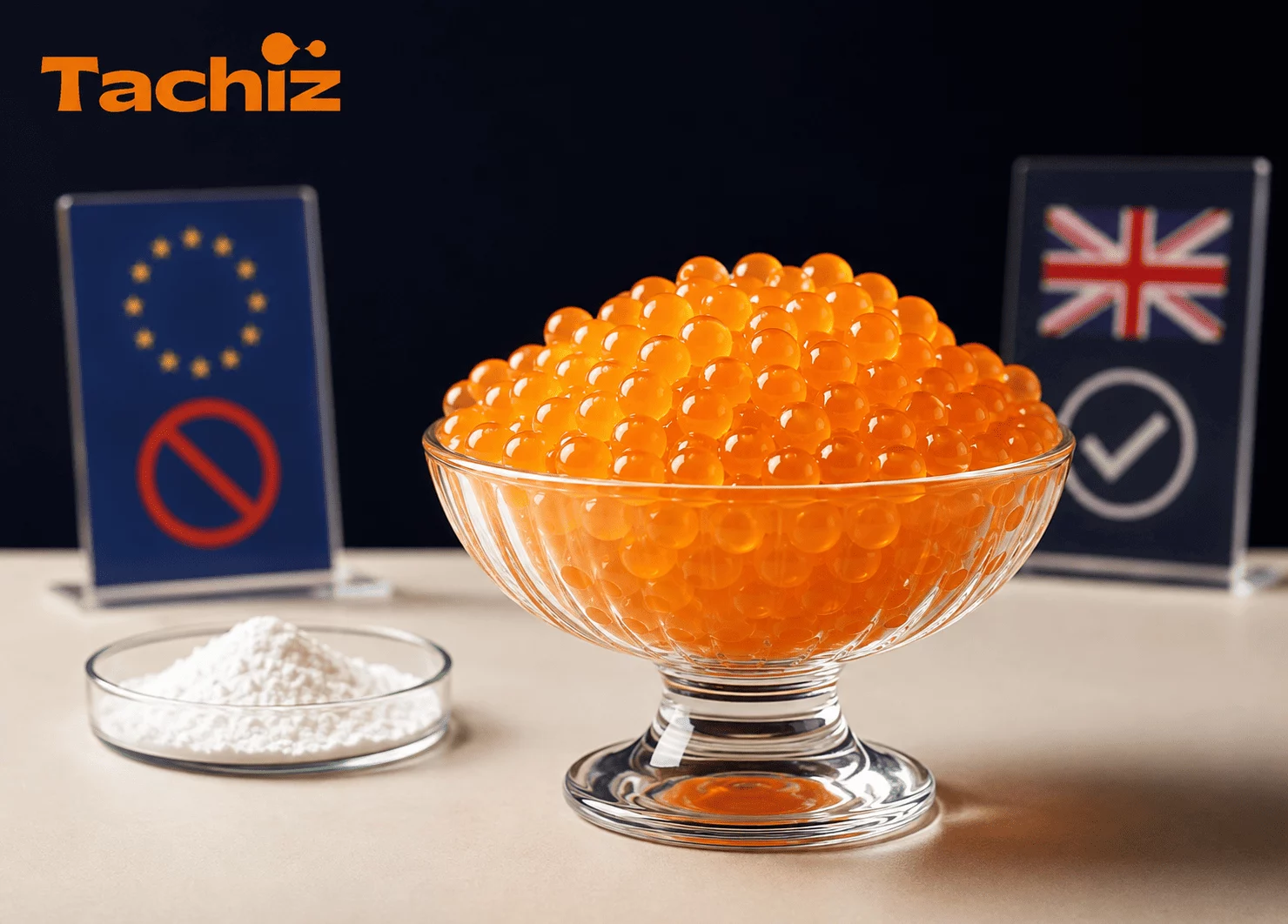
The same food additive can be subject to different rules in the European Union and Great Britain. Since 2022, titanium dioxide E171 has no longer been permitted as a food additive in the EU. However, current official data in Great Britain still lists E171 as an authorised food additive. This difference highlights an important point for food exporters: Europe is not a single regulatory market. The EU, Great Britain, and Northern Ireland do not follow exactly the same rules. Product development should therefore not rely on one formulation for every market. Each destination must be reviewed individually.

What Is Titanium Dioxide E171?

Titanium dioxide has the chemical formula TiO₂ and is identified as E171 in the food additive numbering system. According to the European Food Safety Authority, or EFSA, E171 was previously authorised for use as a food colour. Technical information published by EFSA describes it as a white powder that is insoluble in water and organic solvents. It has been used in products such as confectionery, chewing gum, icing, pastries, certain dairy products, and sauces.

Why Did the EU Ban Titanium Dioxide E171?

In 2021, EFSA reassessed the safety of titanium dioxide E171 as a food additive. Based on the scientific evidence available at the time, EFSA concluded that concerns about the potential genotoxicity of titanium dioxide particles could not be ruled out. EFSA was also unable to establish an Acceptable Daily Intake. As a result, EFSA concluded that E171 could no longer be considered safe when used as a food additive. It is important to interpret this conclusion accurately. It does not mean that EFSA proved ordinary dietary exposure will inevitably cause a specific disease. Rather, the available evidence was not sufficient to rule out the relevant safety concerns or continue confirming E171 as safe for use as a food additive.

When Did the EU Ban Take Effect?

In January 2022, the European Commission adopted Commission Regulation (EU) 2022/63, withdrawing the authorisation of titanium dioxide E171 as a food additive. The regulation included a six-month transition period. After this period ended on 7 August 2022, E171 could no longer be used as a food additive in foods subject to EU regulations. Products intended for Germany, France, Italy, Spain, the Netherlands, Belgium, or any other EU Member State must therefore comply with the EU requirements for E171.

Is E171 Still Permitted in Great Britain?

As of August 2026, the Food Standards Agency’s register of authorised regulated food and feed products continues to list titanium dioxide E171 as authorised in England, Scotland, and Wales, which together form Great Britain. However, authorised does not mean that E171 can be added freely to every type of food. Food businesses must still check the applicable legislation to confirm whether the additive is permitted in a specific food category and whether any conditions or quantitative limits apply.

How Do the Rules in Northern Ireland Differ?

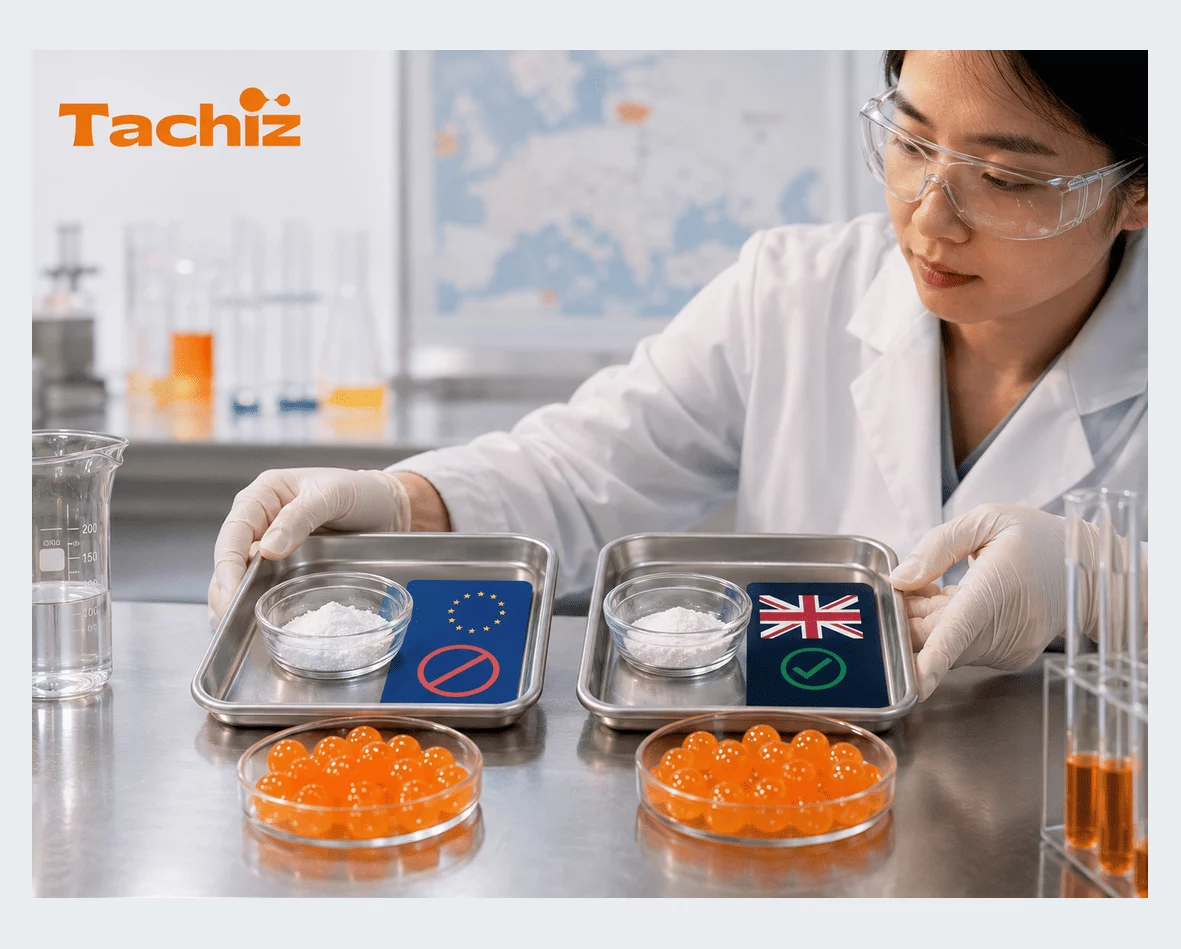
Great Britain and Northern Ireland should not be treated as the same food regulatory area. UK government guidance updated in 2026 states that titanium dioxide has not been permitted as a food additive in food manufacturing in Northern Ireland since 7 February 2022. Following the end of the six-month transition period on 7 August 2022, E171 could no longer be used to manufacture food in Northern Ireland. The current market distinctions can be summarised as follows: UK government guidance also states that certain goods containing titanium dioxide that are authorised in Great Britain may enter Northern Ireland through the Northern Ireland Retail Movement Scheme, or NIRMS. This special arrangement does not mean that Northern Ireland has reauthorised E171 for local food manufacturing. Eligible products must meet the applicable NIRMS requirements and be intended for final consumption in Northern Ireland rather than onward movement into the EU market. Tachiz food laboratory formulating compliant popping boba without titanium dioxide E171

Why Can Food Exporters Not Rely on One Formulation?

The different regulatory approaches to E171 in the EU and Great Britain illustrate an important principle of international food development: formulations must follow the requirements of the destination market. If the same product is intended for multiple countries or regions, several points should be confirmed before production begins.

1. The Actual Destination Market

Referring only to the UK market is not specific enough. Businesses must determine whether the product will be sold in England, Scotland, Wales, or Northern Ireland.

2. The Additive’s Authorisation Status

The same additive may be prohibited in one market and authorised in another. Businesses should consult the latest regulations and official databases published by the relevant authorities in the destination market.

3. Applicable Food Categories and Conditions of Use

An additive appearing on an authorised list does not mean it can be used in every product. Businesses must confirm whether it is permitted in the relevant food category and whether any usage limits or other conditions apply.

4. Consistency Across Formulations, Labels, and Documents

When different formulations are used for different markets, ingredient lists, product specifications, and export documents must also be reviewed separately. This helps prevent different versions from being mixed up.

5. A Final Regulatory Check Before Shipment

Food additive regulations can change. Even when a product has previously been exported to the same destination, the current requirements should be checked again before production and shipment.

How Does Tachiz Manage Formulations for Different Markets?

Tachiz manages its formulations according to the regulatory requirements of each product’s destination market. Compliance is not treated as a final check after production. It begins when the market, customer requirements, and product specifications are first confirmed. The different approaches to titanium dioxide E171 in the EU, Great Britain, and Northern Ireland demonstrate why Europe cannot be treated as one completely uniform regulatory market. For food exporters, regulatory review should begin with the destination, food category, and formulation specifications. In markets where E171 is not permitted, formulations must comply with the applicable prohibition. In markets where E171 remains authorised, its use must still be evaluated according to the customer’s required appearance, order specifications, and applicable conditions of use. If you are developing popping boba products for the EU, Great Britain, or other international markets, contact Tachiz to discuss your product specifications and market requirements. Every texture innovation should begin with the right regulatory framework. Titanium dioxide E171 compliant popping boba formulation comparison for EU and Great Britain markets

Frequently Asked Questions

Can Titanium Dioxide E171 Be Used in the EU?

No. Since 7 August 2022, E171 has not been permitted for use as a food additive in the European Union.

Is Titanium Dioxide E171 Legal in the UK?

Great Britain and Northern Ireland must be considered separately. As of August 2026, E171 remains listed as an authorised food additive in England, Scotland, and Wales. It may not be used to manufacture food in Northern Ireland, although certain eligible Great Britain retail goods containing E171 may enter Northern Ireland through NIRMS.

Has EFSA Proven That E171 Causes Cancer?

No. EFSA did not conclude that E171 has been proven to cause cancer. EFSA concluded that concerns about the potential genotoxicity of titanium dioxide particles could not be ruled out. Therefore, E171 could no longer be considered safe when used as a food additive.

Does E171’s Authorised Status in Great Britain Mean It Can Be Used in Every Food?

No. Businesses must still confirm whether E171 is permitted in the relevant food category and comply with all applicable conditions of use, quantitative limits, and labelling requirements.

Which Market’s Regulations Should an Exported Food Product Follow?

The product should comply with the current regulations of its actual destination market. If a product will be sold in multiple markets, the formulation, food additives, labelling, and supporting documents should be reviewed separately for each destination. Learn more about Tachiz: About Tachiz Popping Boba LinkedIn

European Halal Food Market: Can One Certification Cover Every Country?

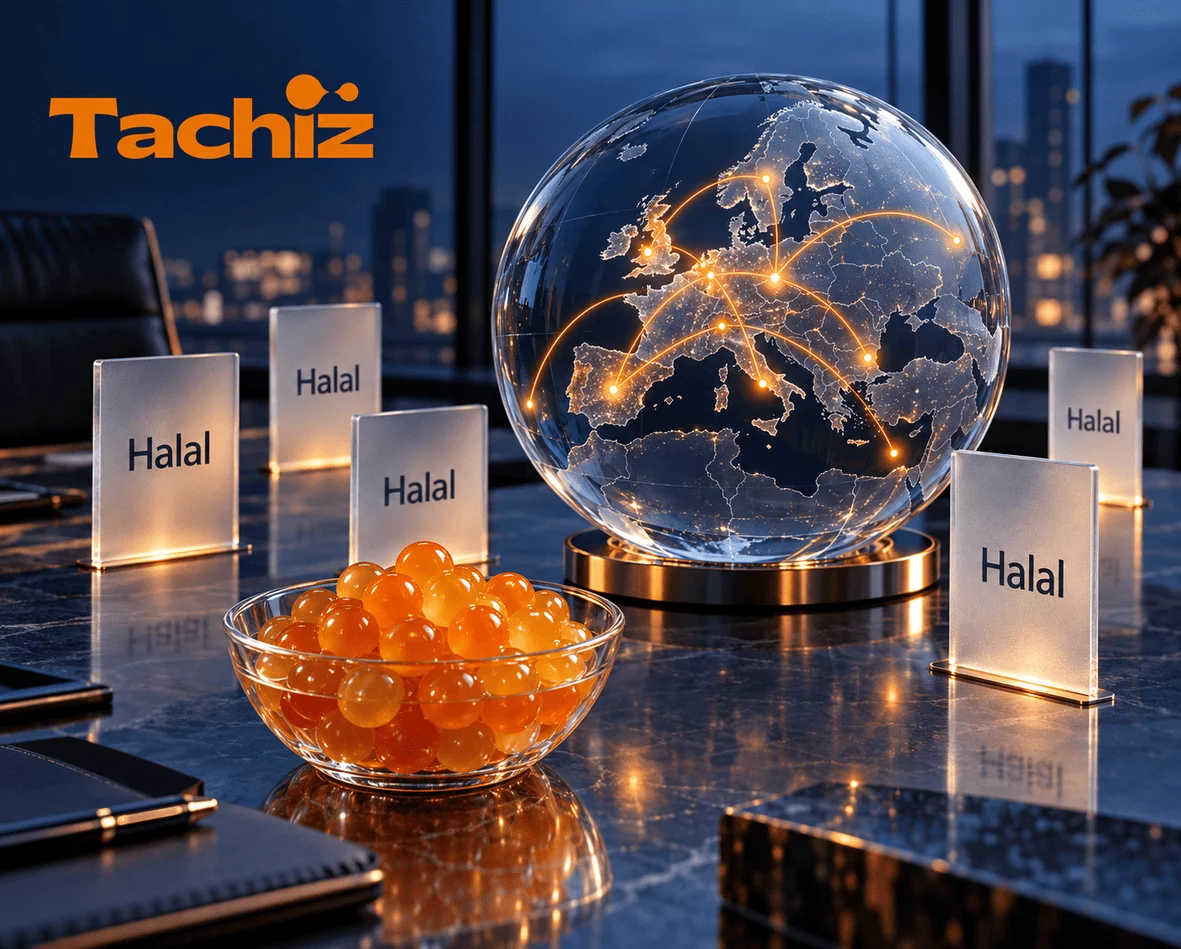
The European Halal food market is expanding rapidly, but for food suppliers entering multiple countries, having a Halal certificate is only the beginning. The key question is: Is the certificate accepted by the target market, importer, retailer, and consumer? The European Union has common food safety, labeling, and traceability regulations. However, it does not have a single EU-wide Halal certification system that every country and distribution channel must accept. Certification bodies, audit methods, religious interpretations, and buyer requirements may differ between markets.

How Large Is the European Halal Food Market?

According to MarkWide Research, the European Halal food and beverage market is projected to grow from USD 82.4 billion in 2026 to USD 174.58 billion by 2035, with a compound annual growth rate of approximately 8.70%. The forecast covers meat, dairy products, snacks, beverages, and other food categories. France is one of Europe’s most important Halal markets. When supermarkets, butcher shops, grocery stores, and local markets are included, its annual Halal food market is estimated at approximately EUR 6 billion. More than one in four French households has purchased Halal food. Le Monde Germany also has a significant consumer base, with Muslims accounting for approximately 6.6% of the population. Deutsche Islam Konferenz These figures show growing opportunities for Halal ingredients, processed foods, retail products, and foodservice applications. European Halal food market compliance and international business expansion for popping boba

Why Is One Halal Certificate Not Always Enough?

1. EU Food Law and Halal Certification Are Different Requirements

Food products entering the EU must comply with regulations covering food safety, ingredients, allergens, labeling, and traceability. Under the EU General Food Law, food businesses must be able to trace their ingredients and identify the businesses receiving their products. Voluntary Halal claims must also be accurate, clear, and not misleading. Meeting EU food regulations does not automatically make a product Halal. Likewise, Halal certification does not replace general food-law compliance. Suppliers must manage both.

2. Certification Standards May Differ

The basic principles of Halal are similar, but certification bodies may apply different requirements to: OIC/SMIIC has developed standards for Halal food and certification bodies, but these standards are not applied uniformly in every country or market. OIC/SMIIC Halal Standards Therefore, two suppliers may both hold Halal certification while having different product scopes, audit requirements, and levels of market acceptance.

3. Buyers May Specify Accepted Certification Bodies

Importers, retailers, restaurant chains, and food manufacturers may require certification from specific organizations based on procurement policies or consumer expectations. The final destination also matters. If a product is re-exported from Europe, the destination country may only accept certificates issued by recognized organizations. Malaysia’s JAKIM, for example, maintains an official list of recognized foreign Halal certification bodies.

What Should Food Suppliers Confirm?

Before entering the European Halal food market, food suppliers should confirm:
  1. Which countries will receive the product?
  2. Does the buyer require a specific Halal certification body?
  3. Does the certificate cover the product and manufacturing site?
  4. Are additional ingredient documents required?
  5. Are segregation, cleaning validation, or special audit records necessary?
  6. Will the product be re-exported to another country?
  7. How should the Halal logo and certification information appear on the label?
Confirming these requirements early can reduce the risk of repeated audits, ingredient changes, packaging revisions, and shipment delays. European Halal food market compliance and laboratory quality testing for popping boba ingredients

Halal Certification Requires Ongoing Management

In the growing European Halal food market, Halal compliance can be affected by changes to ingredients, suppliers, formulations, or equipment. Halal compliance can be affected by changes to ingredients, suppliers, formulations, processing aids, equipment, or manufacturing locations. Businesses should regularly review certificate validity, manage production changes, maintain cleaning and segregation records, and preserve batch traceability. Procurement, production, R&D, quality management, warehousing, and document-control teams all play a role.

Tachiz and Halal Market Requirements

Tachiz obtained Halal certification in 2018 and continues to integrate food safety, quality management, and international market requirements into its operations. For a food ingredient supplier, certification is most valuable when supported by reliable ingredient records, production controls, documentation, and traceability. A Halal certificate can open the first door. The ability to understand each market and maintain a consistent management system is what supports long-term international growth. Tachiz obtained Halal certification in 2018 to meet the strict standards of the European Halal food market and international clients. Learn more about Tachiz: About Tachiz Popping Boba LinkedIn

EU Food Allergen Labelling and Traceability: What Food Brands and Ingredient Suppliers Need to Know

When exporting food products to the European market, complying with EU food allergen labelling regulations and maintaining robust supply-chain traceability are critical for food business operators. Linking ingredient batches with production records and finished-product lot numbers can further support customer audits, incident investigations, and product recalls. For brands using popping boba in beverages, desserts, yogurt, or packaged foods, a general product specification sheet may not be enough. When customers or authorities request an investigation, the brand must be able to identify the ingredients and allergen documents associated with a specific production batch.

Which Food Allergens Are Regulated in the EU?

Under Regulation (EU) No 1169/2011, food products sold in the EU must clearly indicate the following 14 allergen categories when they are used as ingredients: For prepacked foods, the allergen name must normally be emphasised within the ingredients list using a clearly distinguishable typeface, style, or background colour. If the product does not require an ingredients list, allergen information should be provided through an appropriate statement such as “Contains”.

Allergen Information Is Also Required for Non-Prepacked Foods

Restaurants, cafés, deli counters, and other businesses selling non-prepacked foods must also provide allergen information. However, the method of providing this information may vary between EU Member States. In some situations, allergen information may be communicated verbally, but consumers must be clearly informed about how to obtain it, and written information must be available upon request. This means businesses should not assume that every restaurant menu must display allergens in bold text. The applicable requirements should be confirmed according to the product format and the country where it will be sold.

Why EU Food Allergen Labelling Requires Batch Traceability

Article 18 of Regulation (EC) No 178/2002 establishes the EU’s general principles for food traceability. To ensure full compliance with EU food allergen labelling rules, food business operators must maintain appropriate systems and records that allow them to identify:

This is commonly described as the “one step back, one step forward” traceability principle.

When an allergen labelling error, quality issue, or food safety incident occurs, effective traceability helps businesses verify compliant EU food allergen labelling records, identify affected products, and respond more quickly.

The regulation establishes a basic traceability obligation. Connecting each ingredient batch with production records and finished-product lot numbers provides an additional level of control that can support customer audits, investigations, and product recalls.

Food quality control technician checking allergen labelling and batch traceability for popping boba production

What Should Brands Confirm When Using Popping Boba?

Even when a popping boba formulation does not intentionally contain any of the EU’s 14 regulated allergens, businesses should not rely on a general “allergen-free” assumption. Before introducing the ingredient into a finished product, brands should request and review:
  1. The latest product specification and complete ingredient information
  2. An allergen declaration and information about compound ingredients
  3. Cross-contact risks and the supplier’s allergen-control procedures
  4. Production dates, lot numbers, and storage requirements
  5. Batch-level testing or quality-control records
  6. Traceability and response procedures for product issues
The food business operator placing the final product on the market remains responsible for ensuring that the finished product is labelled correctly. The complete recipe, production process, quantity of each ingredient, and destination market should therefore be evaluated before sale.

How Does Tachiz Manage Product Traceability?

Tachiz has maintained FSSC 22000 certification since 2017 and implemented a Digiwin ERP system in 2021 to support order, production, and batch-data management. Through systematic recordkeeping, the Tachiz team can trace relevant manufacturing information by product and lot number. This also supports the preparation of product specifications, allergen declarations, and batch-related documents when requested by customers. For Tachiz, food safety is more than a certification. It is part of our daily work, from ingredient verification and document management to production control and traceability records. Entering the EU market requires more than placing allergen information on a label. Ingredient documents, batch management, and supply-chain traceability all influence how effectively a brand can respond to customers and regulatory authorities. If you are developing a beverage, dessert, ready-to-drink product, or packaged food containing popping boba, contact the Tachiz team to discuss product specifications, application testing, and export documentation requirements.

Frequently Asked Questions

Can popping boba be described as allergen-free?

A general allergen-free claim should not be based solely on the product category. Different flavours, formulations, and compound ingredients may have different allergen profiles. Always review the latest product specification, allergen declaration, and actual production conditions.

Is a general product specification sufficient for EU traceability?

A general specification explains the standard characteristics of a product. However, customer audits and food safety investigations may also require ingredient, production, and shipment records linked to a specific lot.

What information should be checked before exporting food to the EU?

In addition to allergen information, businesses may need to confirm the product name, ingredients, net quantity, storage instructions, date marking, nutrition information, responsible food business operator details, and other applicable requirements. Language rules and requirements for non-prepacked foods may also differ between EU Member States. Learn more about Tachiz: About Tachiz Popping Boba LinkedIn

Will France Make Nutri-Score Mandatory? 2026 Guide for Food Exporters

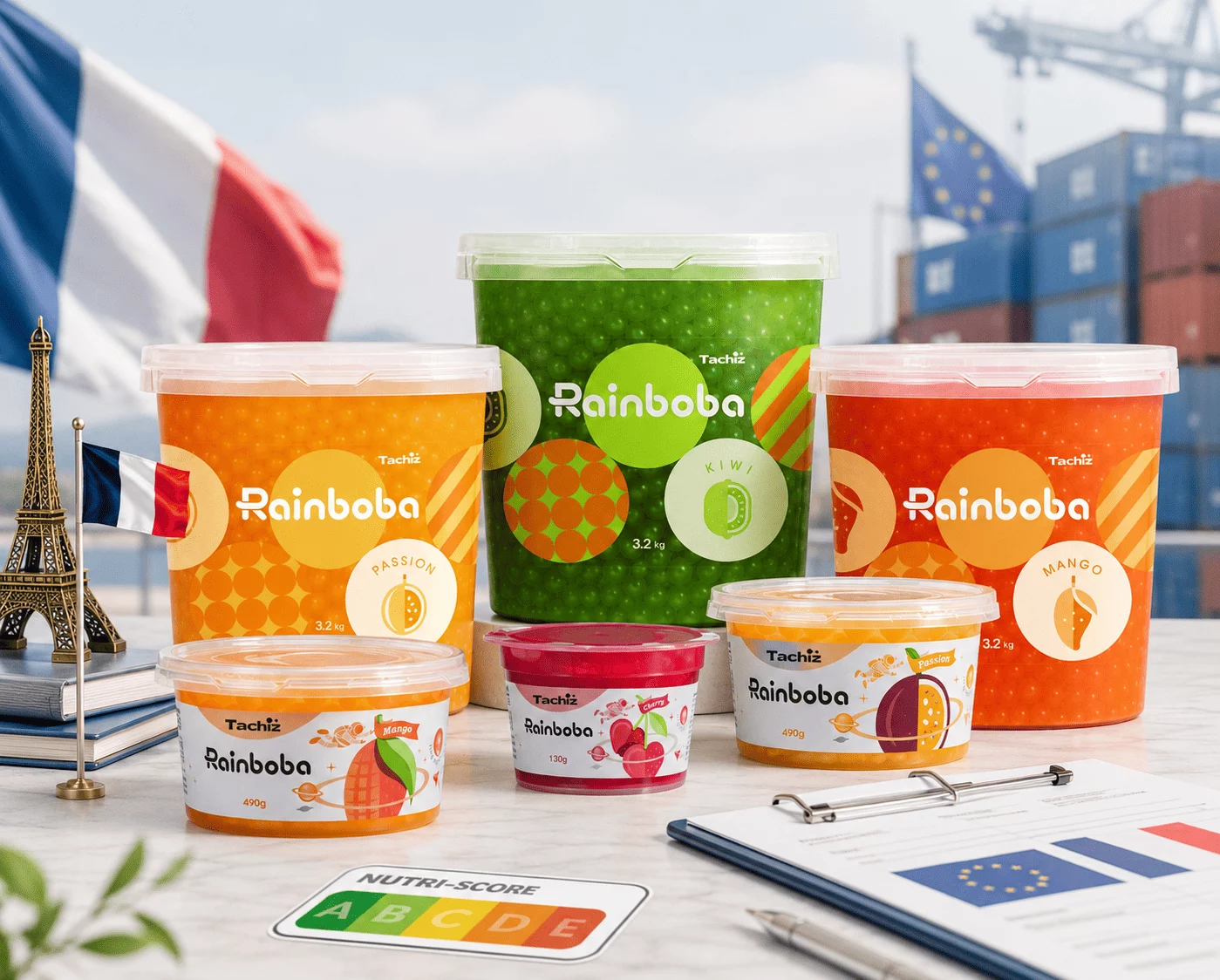
For food brands preparing to enter the French or European market, food regulations are not limited to ingredients and food additives. Nutrition labeling is also becoming an increasingly important factor affecting product development, packaging design, and market strategy. One important example is Nutri-Score, the front-of-pack nutrition labeling system that France has promoted for years. In 2025, the French National Assembly adopted a proposal related to Nutri-Score. The proposal considered imposing a contribution equal to 5% of pre-tax turnover on certain food businesses that did not comply with relevant Nutri-Score display requirements. Although the measure ultimately did not become law, the legislative process still sent an important signal: France continues to push for greater transparency in food nutrition information, and Nutri-Score may become even more important in the food market.

What Is Nutri-Score?

Nutri-Score is a front-of-pack nutrition labeling system displayed on food packaging. Consumers see five grades: A, B, C, D, and E These grades provide a quick indication of the overall nutritional profile of a food product. The Nutri-Score calculation takes into account different nutritional factors, including: Compared with a traditional nutrition facts panel, Nutri-Score allows consumers to understand the overall nutritional profile of a product more quickly without having to read each nutrient value individually. For food brands, this means that a product’s nutritional composition may increasingly influence the consumer’s first impression.

Is Nutri-Score Mandatory in France?

No, not currently. As of 2026, Nutri-Score in France remains a government-recommended voluntary nutrition labeling system. It is not legally mandatory for all food products. However, in 2025, France came relatively close to introducing measures that could have made Nutri-Score much more influential in practice. During discussions on the 2026 Social Security Financing Bill, the French National Assembly adopted a provision related to Nutri-Score. The proposed system did not simply state: “Every food product must display Nutri-Score.” Instead, it used a financial mechanism to create a strong incentive for businesses to adopt the labeling system.

Products Without Nutri-Score Could Have Faced a 5% Turnover Contribution

Under the proposal, food businesses falling within the relevant scope and not meeting certain Nutri-Score display requirements could have been required to pay a contribution equivalent to: 5% of pre-tax turnover It is important to distinguish this from an administrative fine. The more accurate legal term is contribution, meaning a financial levy or charge rather than a penalty. For example, if a food company generated: €1,000,000 in relevant pre-tax turnover in France, 5% would equal: €50,000 Therefore, even if the proposed system did not formally make Nutri-Score mandatory, the potential financial cost could have created a very strong incentive for businesses to adopt it. This is one reason why the proposal attracted significant attention within the French food industry.

Did the 5% Nutri-Score Contribution Become Law?

No. On November 21, 2025, the French Senate rejected the relevant provision. When the bill later returned to the National Assembly, there were attempts to restore the measure, but they were unsuccessful. As a result, the final 2026 French Social Security Financing Law did not include the proposed 5% Nutri-Score contribution. This means that, at present, there is no French rule stating that: “A food company must pay 5% of its turnover simply because it does not display Nutri-Score.” This distinction is important for food exporters planning to enter the French market.

Why Should Food Exporters Still Pay Attention?

Food regulations rarely change overnight. New rules often develop gradually through policy discussions, legislative proposals, parliamentary debates, and formal implementation. Although this Nutri-Score proposal did not become law, it demonstrates that some French policymakers are interested in strengthening food nutrition transparency. For food exporters, the key question should therefore not only be: “Is Nutri-Score mandatory today?” It should also be: “Where could French nutrition labeling policy be heading in the future?” For brands developing new products, redesigning packaging, or planning a long-term presence in France, understanding these trends early can reduce the cost and complexity of future changes.

Nutri-Score May Influence Product Development

Nutri-Score is not simply another logo placed on packaging. It may also influence product formulation. Food brands may need to reassess factors such as: If a product receives a lower Nutri-Score rating, such as D or E, a brand may need to consider whether to reformulate the product or adjust its market positioning. As a result, nutrition labeling is gradually expanding beyond packaging compliance and becoming part of: product development, brand positioning, and market communication.

Exporting Food to France Requires More Than EU Compliance

Another common misconception among international food brands is: If a product complies with EU food regulations, the same market strategy can be used across every European country. In practice, the situation is more complex. The European Union has many harmonized food regulations, but individual countries may still adopt different approaches to areas such as: France’s strong promotion of Nutri-Score is a clear example. Therefore, when planning: Taiwan-to-France food exports or broader European market expansion, brands should not only verify baseline EU regulatory requirements but also understand the policies and market expectations of the specific country where the product will be sold. Popping boba beverage applications for European and French food export markets

Food Exporters Need to Consider Both Regulation and Market Trends

For food companies, regulatory compliance is only the first step toward entering a market. A strong international product development strategy should also consider: What do current regulations allow? What do retailers require? What are consumers increasingly concerned about? How might future regulations change? If nutrition labeling or product formulation issues are discovered only after the product has been finalized, packaging has been printed, or shipments are already being prepared, redesigning and retesting can create additional costs. For this reason, identifying the destination market early in the product development process is an important part of international food export planning.

How Does Tachiz Respond to Different Market Requirements?

Tachiz works with food brands, importers, and product development partners from different international markets. Each market may have different requirements regarding ingredients, product specifications, labeling, and consumer expectations. For this reason, we believe: A product designed for the global market should consider not only the product itself, but also the destination market from the beginning. From food additives to nutrition labeling, market regulations continue to evolve. Tachiz continues to monitor developments in international food markets and relevant regulatory trends, while working with customers to discuss suitable product development directions based on their target market, brand positioning, and product requirements. For food brands preparing to enter France, the European Union, or other international markets, considering both market expectations and regulatory requirements early can help reduce the risk of costly adjustments later.

FAQ: France Nutri-Score

Is Nutri-Score mandatory in France?

No. As of 2026, Nutri-Score remains a government-recommended voluntary nutrition labeling system in France. It is not legally mandatory for all food products.

Will companies be charged 5% of turnover if they do not display Nutri-Score?

Not under current law. France considered a proposal in 2025 involving a contribution based on 5% of pre-tax turnover for certain businesses that did not meet relevant Nutri-Score display requirements, but the provision ultimately did not become law.

How is Nutri-Score calculated?

Nutri-Score evaluates the overall nutritional composition of a food product. Factors may include energy, sugar, saturated fat, salt, fiber, protein, and other nutritional components. The final result is displayed as a grade from A to E.

Do food products exported to France have to display Nutri-Score?

Not all food products are currently legally required to use Nutri-Score. However, food exporters should still check the latest French and EU labeling regulations, as well as requirements from importers, retailers, and individual brands.

Why should food exporters continue to monitor Nutri-Score?

Nutri-Score may affect more than packaging design. It can influence product formulation, nutrition strategy, and how consumers perceive a product. France’s 2025 legislative proposal also shows that front-of-pack nutrition labeling may continue to evolve. Learn more about Tachiz: About Tachiz Popping Boba LinkedIn

From Taiwan to Paris: Tachiz to Showcase New Possibilities for Popping Boba at SIAL Paris 2026

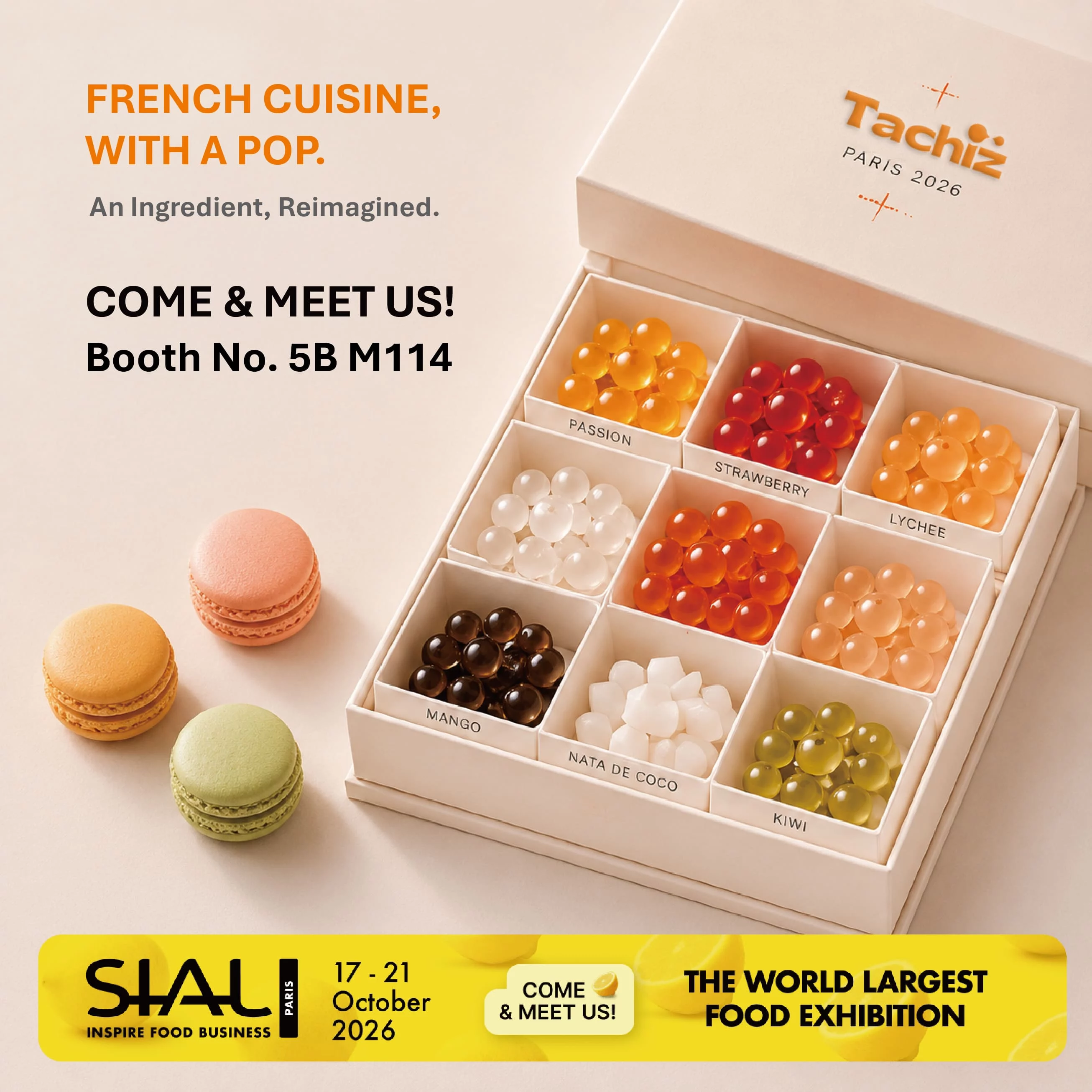
From Tainan, Taiwan, our next stop is Paris. In October 2026, Tachiz Enterprise Co., Ltd. will travel to France to participate in SIAL Paris 2026, one of the global food industry’s major trade shows. We look forward to meeting food brands, importers, distributors, foodservice operators, and product development teams from around the world. SIAL Paris 2026 will take place from October 17 to 21, 2026, at Paris Nord Villepinte in France. Visit Tachiz at Hall 5B, Booth M114 to discover popping boba products made in Taiwan and a wide range of texture innovation applications.

SIAL Paris 2026: Connecting the Global Food Industry

Held every two years, SIAL Paris brings together food manufacturers, brands, retailers, foodservice operators, importers, exporters, and product development professionals. For Tachiz, participating in SIAL Paris is about more than bringing our products to Europe. It is a valuable opportunity to engage directly with the market. Through product tastings and face-to-face discussions, we hope to better understand the needs of different markets in terms of flavor, size, texture, packaging, and product applications. These insights will help guide our next stage of product development in Taiwan.

Popping Boba Is More Than a Beverage Topping

When people think of popping boba, bubble tea is often the first application that comes to mind. As the food industry continues to explore new sensory experiences, however, popping boba is expanding into sparkling beverages, ready-to-drink products, yogurt, ice cream, desserts, baked goods, and modern cuisine. At SIAL Paris 2026, Tachiz will introduce a broader concept to food industry professionals: popping boba can be more than an ingredient that adds flavor. It can also serve as a texture innovation solution within product development. By adjusting the pearl size, outer membrane, filling, flavor, and packaging format, popping boba can be adapted to different drinking methods, consumption occasions, and market positions.

From Classic Popping Boba to 5mm Mini Popping Boba

Different sizes of popping boba create different product experiences. Standard popping boba, measuring approximately 10mm, delivers a pronounced burst and strong visual presence. It is well suited to bubble tea, frozen desserts, yogurt, and other sweet applications. The more delicate 5mm Mini Popping Boba allows consumers to enjoy more pearls in each bite or sip. Its smaller size also makes it more compatible with regular straws, bottled beverages, ready-to-drink products, and refined culinary presentations. For food brands, selecting popping boba involves more than choosing a flavor. Straw diameter, bottle opening, beverage viscosity, inclusion rate, and consumption method should also be tested. With our product development experience, Tachiz helps customers identify the sizes and formulations best suited to their applications.

Releasing Flavor at the Moment of the Bite

In addition to fruit-flavored popping boba, Tachiz continues to explore how encapsulation technology can be applied to savory foods and modern cuisine. Oil-Filled Pearls use a thin edible membrane to encapsulate flavored oil, releasing aroma and flavor when bitten. This design gives chefs and product developers greater control over when flavor is experienced, adding new dimensions to salads, seafood, sushi, cold dishes, pasta, and refined appetizers. From beverages to cuisine and from sweet to savory applications, Tachiz continues to explore new experiences that can be created with the same bursting technology.

Moving from Product Supply to Collaborative Development

Different markets have different expectations for food products. Some customers value a more pronounced bursting sensation, while others need smaller pearls suited to ready-to-drink beverages. Some brands are looking for distinctive flavors, while others require packaging formats designed for retail channels. Tachiz therefore provides more than popping boba products. We also offer OEM, ODM, private-label, and customized product development services. Potential areas of collaboration include: We work with customers from the initial product concept through testing, refinement, and production evaluation, helping transform creative ideas into market-ready products. Tachiz Popping Boba Sample Set and Flavors Showcase at SIAL Paris 2026

Tachiz’s Own Brand, Rainboba, Is Also Coming to Paris

Tachiz will also bring its own brand, Rainboba, to SIAL Paris 2026. Tachiz primarily serves food brands, importers, distributors, and product development teams by providing popping boba manufacturing, customized development, and international supply services. Rainboba, by comparison, focuses more closely on consumer and retail markets, transforming Tachiz’s popping boba technology into products that are easy to understand, convenient to enjoy, and suitable for retail channels. By exhibiting Tachiz and Rainboba together, we aim to give international buyers a clearer view of our full range of capabilities. These extend from food ingredient supply and OEM/ODM development to consumer-facing brands and retail-ready products, allowing us to support different market needs. Rainboba also looks forward to meeting beverage distributors, retailers, and market partners in Paris and introducing fun, eye-catching, and accessible popping boba experiences to more countries.

Experience Bursting Texture from Taiwan in Paris

Every exhibition creates a new opportunity for market dialogue. At SIAL Paris 2026, we look forward to meeting food importers, distributors, beverage brands, retailers, foodservice operators, and product R&D teams. We will also share Tachiz’s experience in popping boba manufacturing and application development. If you are looking for a popping boba supplier, an OEM/ODM partner, or new texture experiences for beverages, desserts, retail products, and culinary applications, visit the Tachiz booth and discuss your product ideas with our team.

SIAL Paris 2026 Exhibition Information

Frequently Asked Questions

When will SIAL Paris 2026 take place?

SIAL Paris 2026 will take place from October 17 to 21, 2026.

Where will SIAL Paris 2026 be held?

The exhibition will be held at Paris Nord Villepinte in France.

Where can I find the Tachiz booth?

Tachiz will be located at Hall 5B, Booth M114.

Can I discuss popping boba OEM or private-label collaboration at the show?

Yes. We welcome food brands, importers, distributors, retailers, and product development teams to discuss customized flavors, product applications, packaging formats, OEM, ODM, and private-label opportunities with Tachiz. Learn more about Tachiz: About Tachiz Popping Boba LinkedIn

How Is Popping Boba Made? The Science Behind the Pearls and the Technology Behind Mass Production

Popping boba is known for its thin outer membrane, juicy center, and satisfying burst when bitten. But how is popping boba actually made? From a food science perspective, the basic principle is not a secret. The outer membrane of popping boba is formed through a reaction involving sodium alginate and calcium, creating a flexible layer that encapsulates the flavored liquid inside. Understanding this reaction explains why popping boba can be formed. However, knowing the science behind popping boba and being able to manufacture millions of consistent pearls are two very different things. That is where food manufacturing technology begins.

How Does Popping Boba Form Its Outer Membrane?

The basic principle behind popping boba comes from a process commonly associated with reverse spherification. When sodium alginate comes into contact with calcium under suitable conditions, a gel-like membrane begins to form. This membrane can surround a liquid center, creating the characteristic structure of popping boba. The result is a pearl that keeps its shape during storage but bursts when pressure is applied during eating. The basic chemistry can be explained publicly. But questions such as: move beyond basic food chemistry and into manufacturing know-how.

Food Chemistry Explains Why. Engineering Determines Whether It Can Be Produced Reliably.

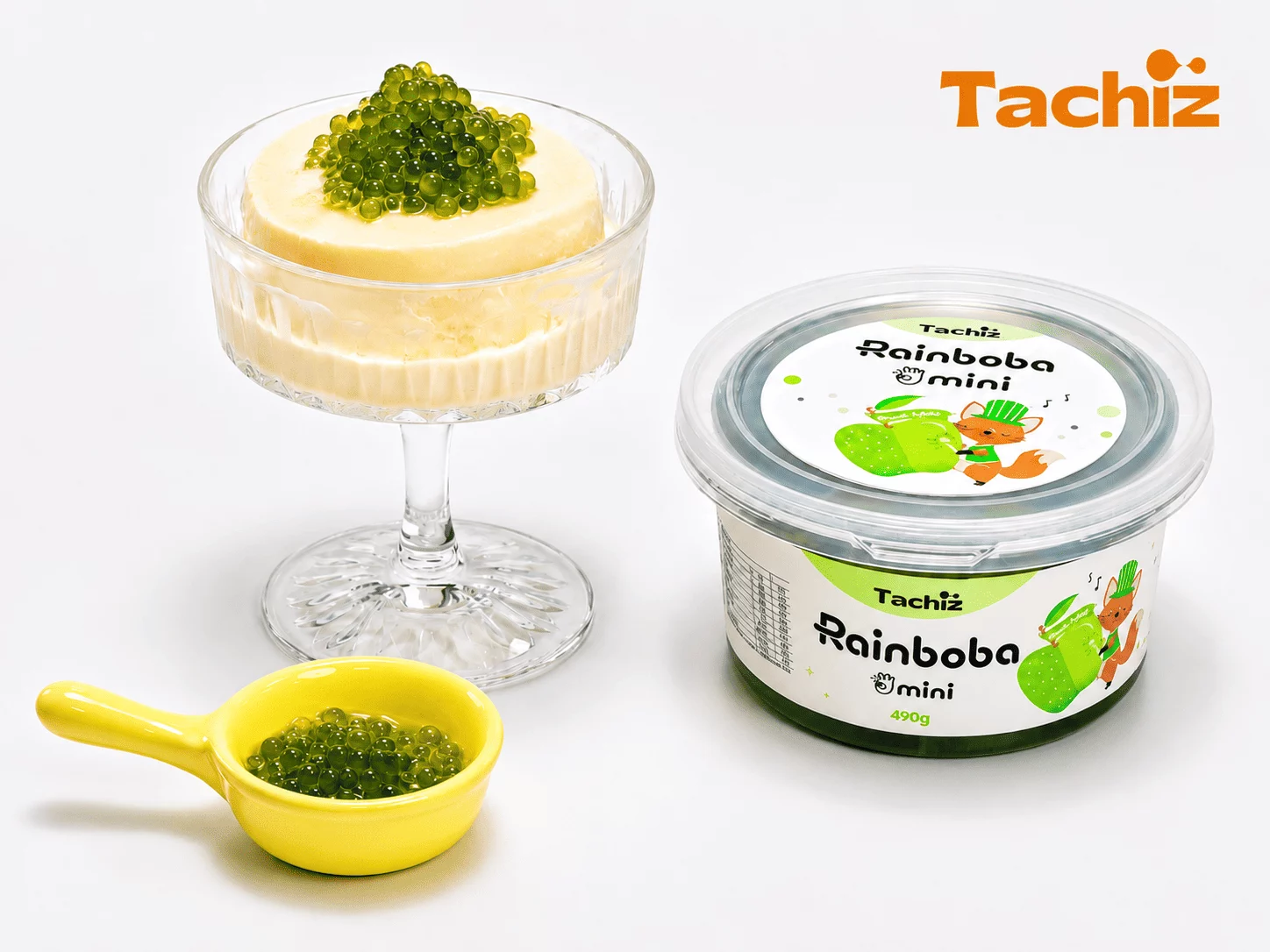
Many food technologies are based on scientific principles that are already widely understood. Emulsification, fermentation, gelation, crystallization, and encapsulation are all examples of processes whose basic mechanisms can be found in food science literature. Popping boba is no different. Knowing that sodium alginate can react with calcium ions tells us why a membrane can form. The greater challenge is transforming that reaction into a controlled, repeatable, and commercially scalable manufacturing process. In simple terms: Chemistry ≠ Engineering. Chemistry explains the reaction. Engineering turns that reaction into a production system capable of delivering consistent products every day. Commercial Rainboba popping boba tubs and bursting pearls for foodservice
Making One Popping Boba Is Different From Making Millions Consistently

Producing a small number of popping pearls in a laboratory or test kitchen is relatively manageable because conditions can be adjusted manually. Commercial food manufacturing is different. Once production is scaled up, manufacturers must consider many factors at the same time: A small change in one production condition may affect the final appearance, texture, bursting sensation, or product stability. For this reason, large-scale popping boba production requires much more than simply knowing a formula. It requires a manufacturing system built through continuous testing, adjustment, process control, equipment optimization, and production experience. That accumulated knowledge becomes part of a manufacturer’s core technical know-how.

Why Do We Share Some Popping Boba Technology?

Technical transparency does not mean publishing every manufacturing detail. At Tachiz, we believe some knowledge should be shared because it helps customers, food developers, and industry professionals better understand the products they are working with. For example, we are happy to explain: These questions explain the “Why.” They help food and beverage brands make better product development decisions. However, exact ingredient ratios, reaction times, equipment settings, manufacturing parameters, and other production conditions belong to the “How.” These details are developed through years of research, testing, problem-solving, and production experience. They are part of a manufacturer’s proprietary know-how.

The Science Can Be Public. The Manufacturing Process Is the Competitive Advantage.

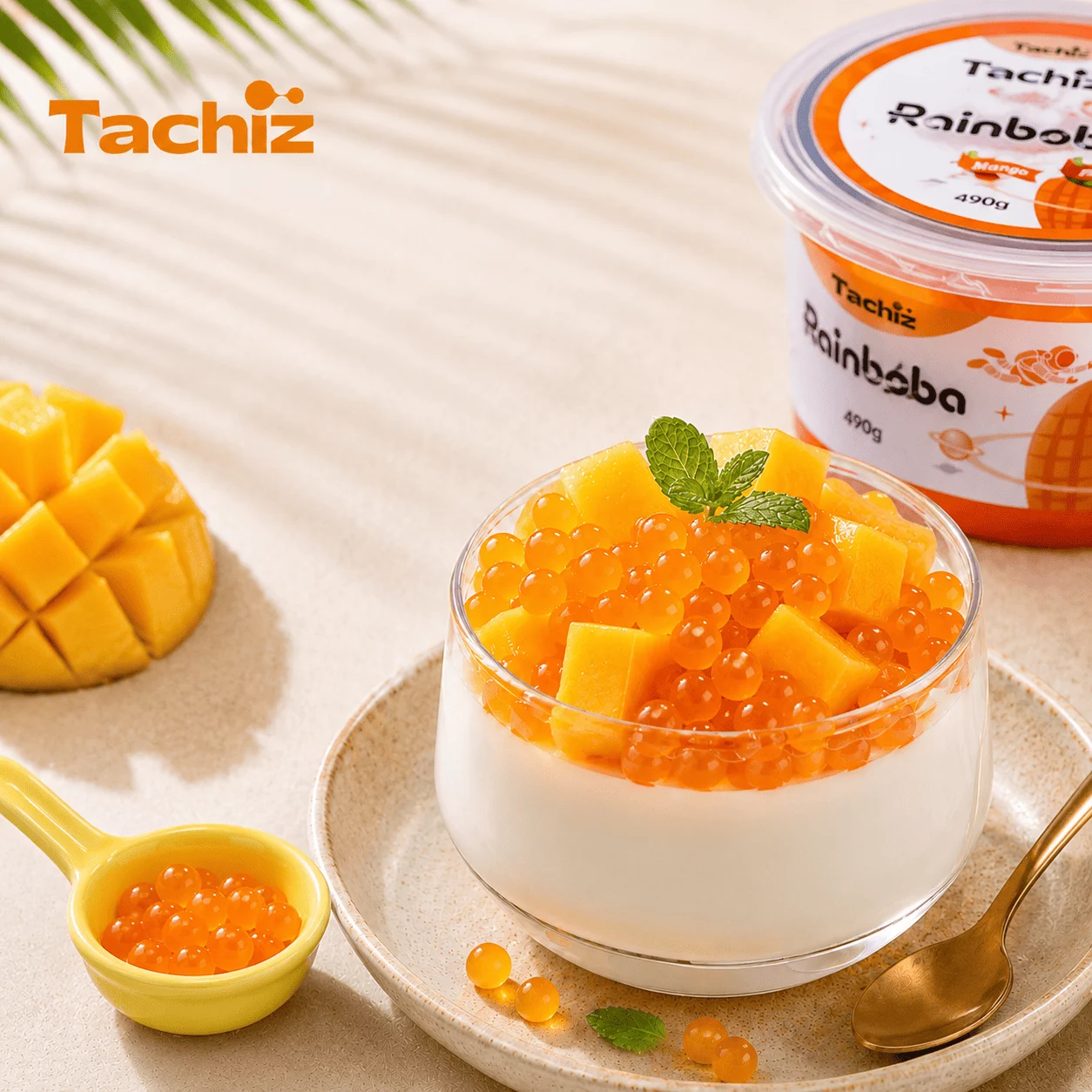
This distinction is not unique to the food industry. In industries such as semiconductor manufacturing, pharmaceuticals, materials science, and precision engineering, the underlying scientific principles may be widely available. The real competitive advantage lies in how a company controls equipment, process parameters, materials, and production conditions to achieve reliable results at scale. Food manufacturing works in much the same way. For popping boba manufacturers, the true technical challenge is not simply understanding how to create a membrane around a liquid. It is the ability to consistently manufacture different sizes, flavors, and product formats while maintaining reliable quality across large production volumes. That is where manufacturing expertise creates value. Tachiz popping boba retail pouch packaging and dessert application
Why Popping Boba Manufacturing Is More Than a Recipe

When discussing food technology, one question helps us decide what should be shared: Are we explaining “Why,” or are we revealing “How”? We are happy to explain the science, application logic, and product design principles behind popping boba. Sharing this knowledge can help beverage brands, food manufacturers, distributors, and product developers better understand the possibilities of popping boba. However, when a discussion reaches precise process parameters, equipment conditions, formulations, or production controls, it enters the area of proprietary manufacturing technology. The basic principle can be understood. The ability to turn that principle into a stable, scalable, and repeatable product is where manufacturing expertise begins. Food innovation is not only about discovering a reaction. It is about creating a process that can make that reaction happen consistently, again and again.

What is popping boba made of ?

Popping boba typically consists of a flavored liquid center surrounded by a thin edible membrane. The membrane is commonly formed through a reaction involving sodium alginate and calcium ions, which creates a gel-like outer layer around the liquid.

How is popping boba made ?

Popping boba is made by encapsulating flavored liquid inside a thin edible membrane. A reaction between sodium alginate and calcium ions helps form the outer layer, while commercial manufacturers use controlled production systems to maintain consistent size, texture, and stability.

Is popping boba made using reverse spherification?

Yes. The basic principle behind popping boba is closely related to reverse spherification, a food science technique used to create a thin membrane around a liquid center.

Why does popping boba burst when you bite it?

Popping boba has a thin, flexible membrane surrounding a liquid filling. When pressure is applied by biting, the membrane breaks and releases the flavored liquid, creating its characteristic bursting sensation.

What is the difference between homemade and commercial popping boba?

Homemade or laboratory-scale popping boba can be produced in small batches, but commercial production requires much greater control over pearl size, membrane thickness, texture, shelf stability, and production consistency.

What is the difference between 5mm and 10mm popping boba?

5mm mini popping boba is smaller, easier to distribute throughout a product, and can be suitable for beverages, bottled drinks, desserts, and refined food applications. 10mm standard popping boba provides a stronger visual presence and a more noticeable bursting sensation, making it popular in bubble tea, desserts, yogurt, and other foodservice applications.

Why is commercial popping boba difficult to manufacture?

Commercial popping boba manufacturing requires precise control over multiple factors, including pearl size, membrane formation, filling stability, texture, equipment settings, and production conditions. Maintaining consistent quality across large volumes requires specialized manufacturing expertise.

Can every popping boba manufacturer use the same production process?

No. While the basic food science may be widely understood, each manufacturer develops its own production methods, equipment settings, quality controls, and technical know-how to achieve consistent results.

What makes a good popping boba manufacturer?

A reliable popping boba manufacturer should be able to maintain consistent pearl size, texture, membrane quality, flavor, product stability, and production quality at commercial scale. Manufacturing capability and quality management are as important as the basic formulation itself. Learn more about Tachiz: Tachiz Rainboba Popping boba LUZIE Oil-Filled Popping Pearl LinkedIn