What is Popping Boba?
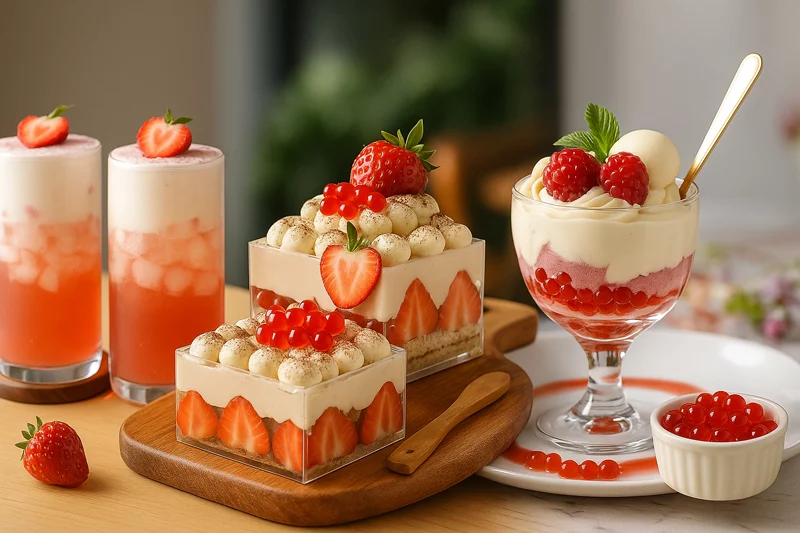
Popping boba (also called popping bubbles boba, boba popping pearls, or bursting popping boba) is a popular addition to desserts and drinks — gel-like spheres filled with flavored liquid that burst when bitten into.
Where Does Popping Boba Come From?
Originating in Taiwan in the 1980s, popping boba evolved from traditional tapioca pearls. Today it's used worldwide as a topping for bubble tea, frozen yogurt, and desserts, and is especially popular in the United States.
What is Popping Boba Made of?
Popping boba is created through molecular gastronomy, combining sodium alginate, calcium lactate, or calcium chloride with flavored fruit juice through spherification — the secret behind its thin gel-like shell and juicy fruit center.
What are the Different Popping Boba Flavors?
Common varieties include strawberry, mango, peach, pomegranate, lychee, kiwi, passion fruit, blueberry, green apple, and cherry.
Popping Boba vs. Tapioca Boba
Popping boba — tapioca-free, bursting with fruity juice when bitten.
Black boba balls — made from tapioca with molasses or brown sugar for color and flavor.
Clear tapioca pearls — flavorless tapioca orbs that absorb the flavor around them.
Flavored boba — tapioca pearls coated with fruity syrups.
Crystal boba — made from konjac, more transparent with a firmer, gelatin-like texture.
The pearls of tapioca boba have a chewy texture, but don't offer the same pleasing pop as popping boba — and unlike popping boba, tapioca typically needs to be cooked.
How to Make Popping Boba at Home
Recipe with Sodium Alginate
Ingredients: 150g fruit juice, 5g sodium alginate, 50g drinking water, 6g calcium lactate, 1 liter distilled water, 2 cups clean water for rinsing, food coloring (optional).
- Dissolve the calcium lactate in distilled water; let sit four hours or overnight, then strain.
- Combine sodium alginate with drinking water until thick and smooth, then mix into the fruit juice; add food coloring if desired.
- Refrigerate the mixture for up to two hours, and prepare a bowl of clean rinsing water.
- Drop the mixture into the calcium lactate solution using a dropper; let sit for ten minutes.
- Rinse the pearls repeatedly with clean water, then serve.
Recipe Without Sodium Alginate
Ingredients: 1 cup vegetable oil, 1 cup fruit juice, ½ teaspoon agar agar powder, 2 cups cold drinking water.
- Freeze the vegetable oil for about one hour.
- Heat the fruit juice and agar powder over medium heat, stirring until it boils.
- Cool for ten minutes, then transfer to a heatproof bowl and cool for another ten minutes.
- Drop the mixture into the frozen oil using a dropper; the pearls will solidify and settle.
- Strain the pearls into a bowl of cold water and rinse thoroughly.
- Air dry briefly before serving.
Popping Boba Calories & Nutrition
A typical 30-gram serving contains approximately 35 calories, 6g carbohydrates, and 6g sugar, and is generally gluten-free, fat-free, and cholesterol-free. Combined with beverages or desserts, the calorie and sugar content increases significantly — a frozen yogurt combination, for example, can add 90–380 calories and 17–73g sugar depending on size.
Where to Buy Popping Boba
Individual consumers can find popping boba through major online marketplaces, while businesses can source in bulk through wholesale suppliers. Tachiz offers bulk wholesale options with ten flavor varieties and three convenient package sizes.
FAQ
How long do popping pearls last?
Unopened packages stay fresh for several months to a year when stored in a cool, dry place away from direct sunlight — refrigeration is ideal. Once opened, use within a few days in an airtight, refrigerated container, as the texture softens over time.
How do I store popping boba?
Keep unopened packages cool and dry (ideally 10–20°C), transfer opened boba to an airtight container, refrigerate to preserve texture, avoid freezing (which hardens the texture), and use within a few days for the best quality.
Is popping boba safe for kids?
Generally safe in moderation, though supervision is recommended due to a potential choking hazard for young children — always check the ingredient list for added sugars or artificial flavors.
Is popping boba healthy?
It's relatively low in calories and fat but can be high in sugar from fruit juice or syrup. It isn't a significant source of vitamins or minerals, so it's best enjoyed in moderation as a treat rather than a dietary staple.
Is popping boba suitable for vegetarians?
Generally yes, since the ingredients are derived from fruit juice, water, sugar, and seaweed-derived sodium alginate — though some brands may use gelatin, so it's worth checking the label.
How many calories does popping boba have?
One to two tablespoons typically contain 20–35 calories, varying by flavor and brand; sugar-free or reduced-calorie versions are also available.
Source: tachizgroup.com
 Contact us
Contact