
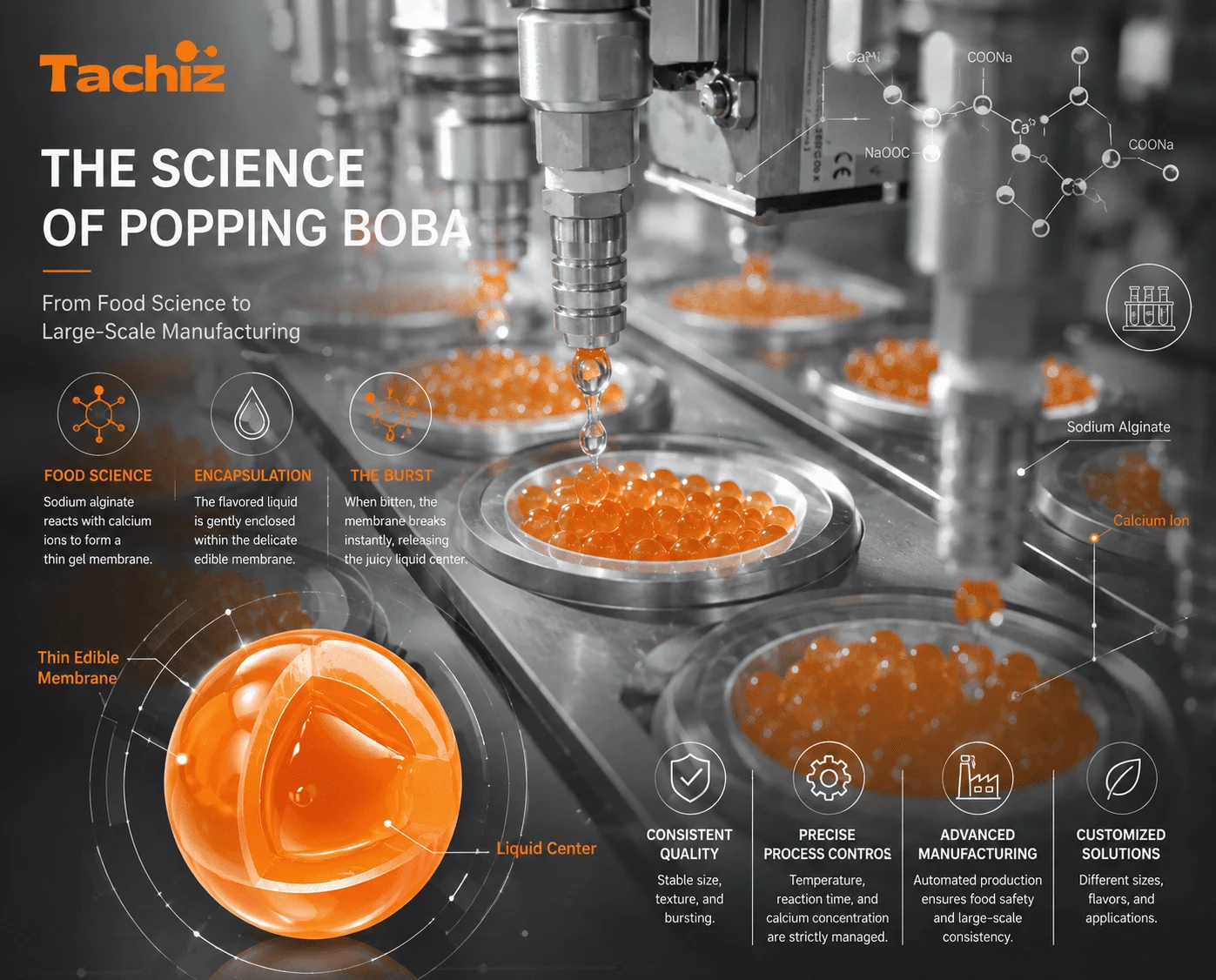
Popping boba is known for its thin outer membrane, juicy center, and satisfying burst when bitten. But how is popping boba actually made?
From a food science perspective, the basic principle is not a secret. The outer membrane of popping boba is formed through a reaction involving sodium alginate and calcium, creating a flexible layer that encapsulates the flavored liquid inside.
Understanding this reaction explains why popping boba can be formed.
However, knowing the science behind popping boba and being able to manufacture millions of consistent pearls are two very different things.
That is where food manufacturing technology begins.
How Does Popping Boba Form Its Outer Membrane?
The basic principle behind popping boba comes from a process commonly associated with reverse spherification.
When sodium alginate comes into contact with calcium under suitable conditions, a gel-like membrane begins to form. This membrane can surround a liquid center, creating the characteristic structure of popping boba.
The result is a pearl that keeps its shape during storage but bursts when pressure is applied during eating.
The basic chemistry can be explained publicly.
But questions such as:
- How thick should the membrane be?
- How long should the reaction take?
- What ingredient ratios should be used?
- How should production equipment be configured?
- How can every pearl remain consistent in size?
move beyond basic food chemistry and into manufacturing know-how.
Food Chemistry Explains Why. Engineering Determines Whether It Can Be Produced Reliably.
Many food technologies are based on scientific principles that are already widely understood.
Emulsification, fermentation, gelation, crystallization, and encapsulation are all examples of processes whose basic mechanisms can be found in food science literature.
Popping boba is no different.
Knowing that sodium alginate can react with calcium ions tells us why a membrane can form.
The greater challenge is transforming that reaction into a controlled, repeatable, and commercially scalable manufacturing process.
In simple terms:
Chemistry ≠ Engineering.
Chemistry explains the reaction.
Engineering turns that reaction into a production system capable of delivering consistent products every day.
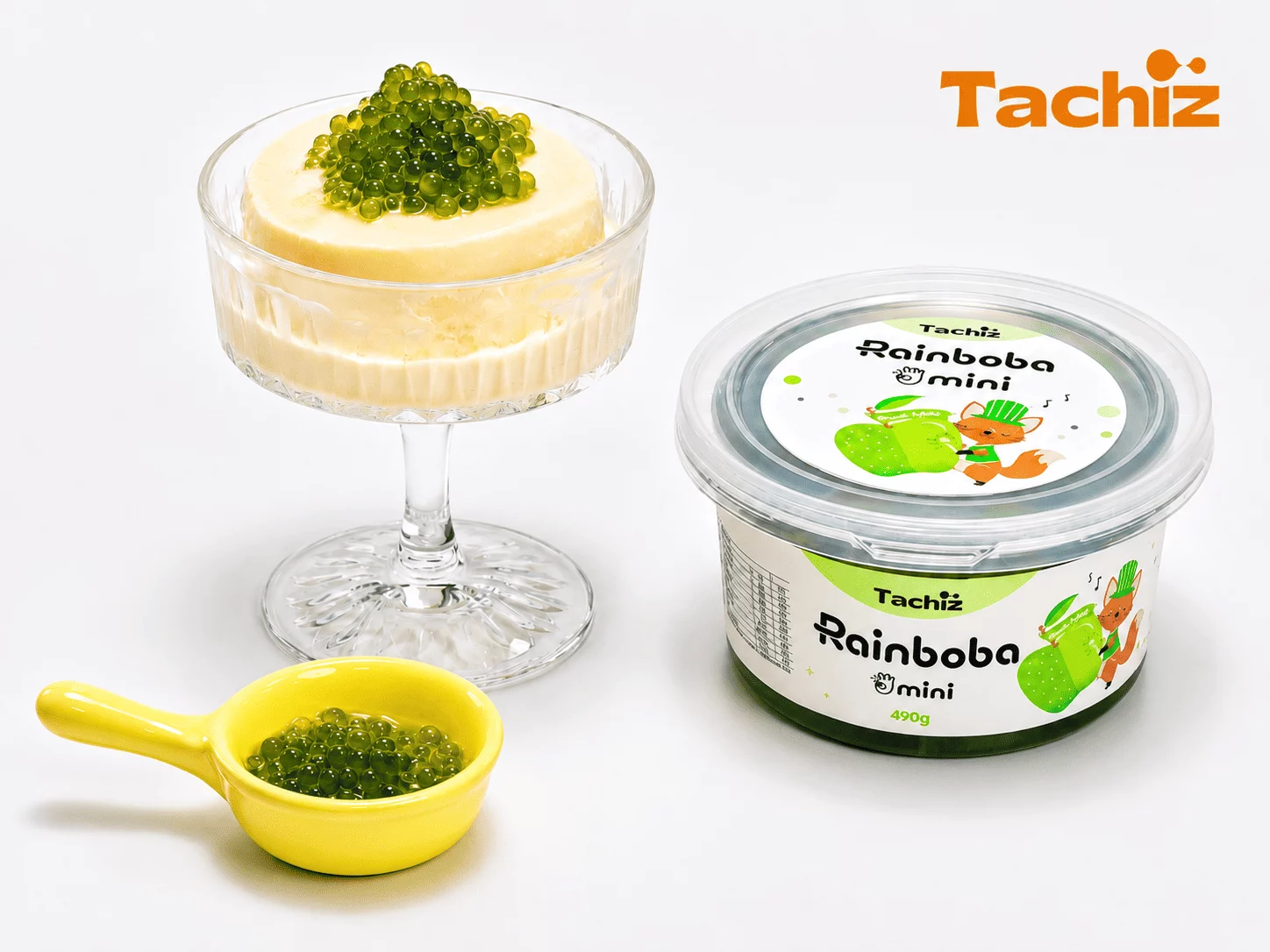
Making One Popping Boba Is Different From Making Millions Consistently
Producing a small number of popping pearls in a laboratory or test kitchen is relatively manageable because conditions can be adjusted manually.
Commercial food manufacturing is different.
Once production is scaled up, manufacturers must consider many factors at the same time:
- Is every pearl approximately the same size?
- Is the membrane too thick or too thin?
- Is the liquid filling completely encapsulated?
- Will the texture remain stable during storage?
- Do different flavors affect membrane formation?
- Can both 5mm mini popping boba and 10mm standard popping boba maintain consistent quality?
- Can the same quality standards be maintained across large production volumes?
A small change in one production condition may affect the final appearance, texture, bursting sensation, or product stability.
For this reason, large-scale popping boba production requires much more than simply knowing a formula.
It requires a manufacturing system built through continuous testing, adjustment, process control, equipment optimization, and production experience.
That accumulated knowledge becomes part of a manufacturer’s core technical know-how.
Why Do We Share Some Popping Boba Technology?
Technical transparency does not mean publishing every manufacturing detail.
At Tachiz, we believe some knowledge should be shared because it helps customers, food developers, and industry professionals better understand the products they are working with.
For example, we are happy to explain:
- Why popping boba forms a membrane
- Why popping boba size affects the eating and drinking experience
- Why different applications may require different pearl sizes
- Why production consistency matters in commercial food manufacturing
- Why product development involves more than choosing a flavor
These questions explain the “Why.”
They help food and beverage brands make better product development decisions.
However, exact ingredient ratios, reaction times, equipment settings, manufacturing parameters, and other production conditions belong to the “How.”
These details are developed through years of research, testing, problem-solving, and production experience.
They are part of a manufacturer’s proprietary know-how.
The Science Can Be Public. The Manufacturing Process Is the Competitive Advantage.
This distinction is not unique to the food industry.
In industries such as semiconductor manufacturing, pharmaceuticals, materials science, and precision engineering, the underlying scientific principles may be widely available.
The real competitive advantage lies in how a company controls equipment, process parameters, materials, and production conditions to achieve reliable results at scale.
Food manufacturing works in much the same way.
For popping boba manufacturers, the true technical challenge is not simply understanding how to create a membrane around a liquid.
It is the ability to consistently manufacture different sizes, flavors, and product formats while maintaining reliable quality across large production volumes.
That is where manufacturing expertise creates value.
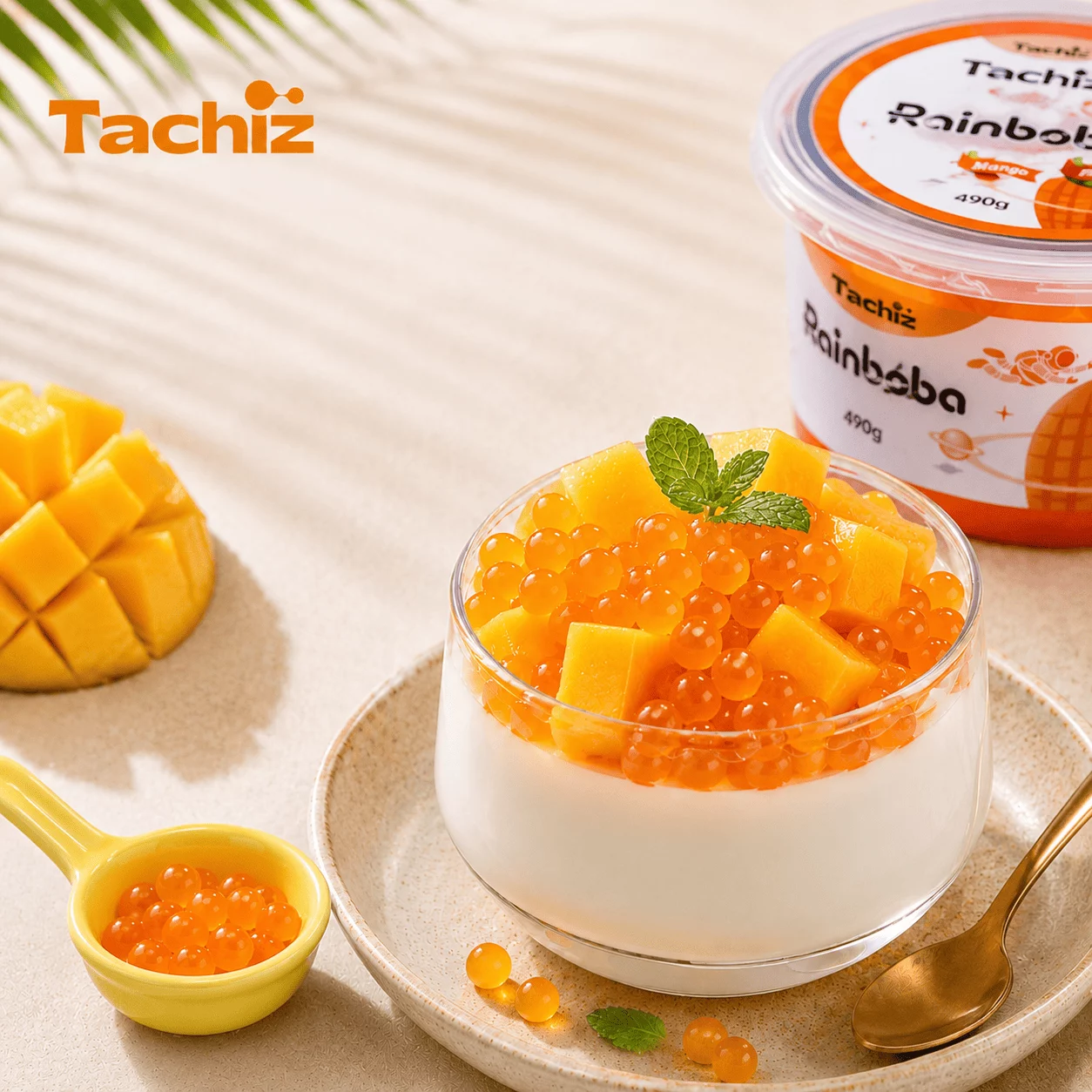
Why Popping Boba Manufacturing Is More Than a Recipe
When discussing food technology, one question helps us decide what should be shared:
Are we explaining “Why,” or are we revealing “How”?
We are happy to explain the science, application logic, and product design principles behind popping boba.
Sharing this knowledge can help beverage brands, food manufacturers, distributors, and product developers better understand the possibilities of popping boba.
However, when a discussion reaches precise process parameters, equipment conditions, formulations, or production controls, it enters the area of proprietary manufacturing technology.
The basic principle can be understood.
The ability to turn that principle into a stable, scalable, and repeatable product is where manufacturing expertise begins.
Food innovation is not only about discovering a reaction.
It is about creating a process that can make that reaction happen consistently, again and again.
What is popping boba made of ?
Popping boba typically consists of a flavored liquid center surrounded by a thin edible membrane. The membrane is commonly formed through a reaction involving sodium alginate and calcium ions, which creates a gel-like outer layer around the liquid.
How is popping boba made ?
Popping boba is made by encapsulating flavored liquid inside a thin edible membrane. A reaction between sodium alginate and calcium ions helps form the outer layer, while commercial manufacturers use controlled production systems to maintain consistent size, texture, and stability.
Is popping boba made using reverse spherification?
Yes. The basic principle behind popping boba is closely related to reverse spherification, a food science technique used to create a thin membrane around a liquid center.
Why does popping boba burst when you bite it?
Popping boba has a thin, flexible membrane surrounding a liquid filling. When pressure is applied by biting, the membrane breaks and releases the flavored liquid, creating its characteristic bursting sensation.
What is the difference between homemade and commercial popping boba?
Homemade or laboratory-scale popping boba can be produced in small batches, but commercial production requires much greater control over pearl size, membrane thickness, texture, shelf stability, and production consistency.
What is the difference between 5mm and 10mm popping boba?
5mm mini popping boba is smaller, easier to distribute throughout a product, and can be suitable for beverages, bottled drinks, desserts, and refined food applications.
10mm standard popping boba provides a stronger visual presence and a more noticeable bursting sensation, making it popular in bubble tea, desserts, yogurt, and other foodservice applications.
Why is commercial popping boba difficult to manufacture?
Commercial popping boba manufacturing requires precise control over multiple factors, including pearl size, membrane formation, filling stability, texture, equipment settings, and production conditions. Maintaining consistent quality across large volumes requires specialized manufacturing expertise.
Can every popping boba manufacturer use the same production process?
No. While the basic food science may be widely understood, each manufacturer develops its own production methods, equipment settings, quality controls, and technical know-how to achieve consistent results.
What makes a good popping boba manufacturer?
A reliable popping boba manufacturer should be able to maintain consistent pearl size, texture, membrane quality, flavor, product stability, and production quality at commercial scale. Manufacturing capability and quality management are as important as the basic formulation itself.
Learn more about Tachiz:
Tachiz
LUZIE Oil-Filled Popping Pearl