
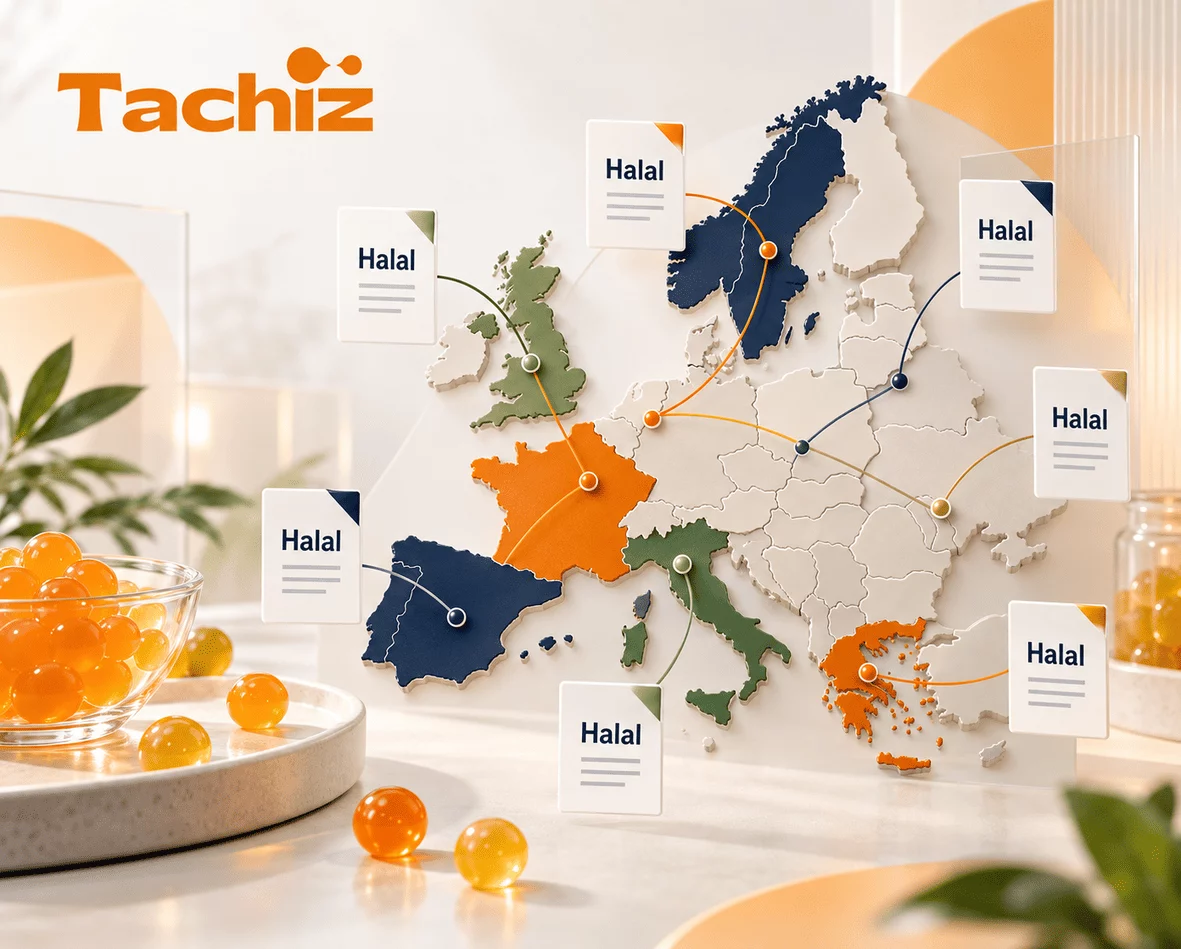
The European Halal food market is expanding rapidly, but for food suppliers entering multiple countries, having a Halal certificate is only the beginning.
The key question is:
Is the certificate accepted by the target market, importer, retailer, and consumer?
The European Union has common food safety, labeling, and traceability regulations. However, it does not have a single EU-wide Halal certification system that every country and distribution channel must accept. Certification bodies, audit methods, religious interpretations, and buyer requirements may differ between markets.
How Large Is the European Halal Food Market?
According to MarkWide Research, the European Halal food and beverage market is projected to grow from USD 82.4 billion in 2026 to USD 174.58 billion by 2035, with a compound annual growth rate of approximately 8.70%. The forecast covers meat, dairy products, snacks, beverages, and other food categories.
France is one of Europe’s most important Halal markets. When supermarkets, butcher shops, grocery stores, and local markets are included, its annual Halal food market is estimated at approximately EUR 6 billion. More than one in four French households has purchased Halal food. Le Monde
Germany also has a significant consumer base, with Muslims accounting for approximately 6.6% of the population. Deutsche Islam Konferenz
These figures show growing opportunities for Halal ingredients, processed foods, retail products, and foodservice applications.
Why Is One Halal Certificate Not Always Enough?
1. EU Food Law and Halal Certification Are Different Requirements
Food products entering the EU must comply with regulations covering food safety, ingredients, allergens, labeling, and traceability.
Under the EU General Food Law, food businesses must be able to trace their ingredients and identify the businesses receiving their products.
Voluntary Halal claims must also be accurate, clear, and not misleading.
Meeting EU food regulations does not automatically make a product Halal. Likewise, Halal certification does not replace general food-law compliance. Suppliers must manage both.
2. Certification Standards May Differ
The basic principles of Halal are similar, but certification bodies may apply different requirements to:
-
Ingredients and processing aids
-
Alcohol, flavors, enzymes, and animal-derived materials
-
Production-line segregation
-
Cleaning and changeover procedures
-
Supplier documentation
-
Batch traceability
-
Audit records
OIC/SMIIC has developed standards for Halal food and certification bodies, but these standards are not applied uniformly in every country or market. OIC/SMIIC Halal Standards
Therefore, two suppliers may both hold Halal certification while having different product scopes, audit requirements, and levels of market acceptance.
3. Buyers May Specify Accepted Certification Bodies
Importers, retailers, restaurant chains, and food manufacturers may require certification from specific organizations based on procurement policies or consumer expectations.
The final destination also matters. If a product is re-exported from Europe, the destination country may only accept certificates issued by recognized organizations. Malaysia’s JAKIM, for example, maintains an official list of recognized foreign Halal certification bodies.
What Should Food Suppliers Confirm?
Before entering the European Halal food market, food suppliers should confirm:
-
Which countries will receive the product?
-
Does the buyer require a specific Halal certification body?
-
Does the certificate cover the product and manufacturing site?
-
Are additional ingredient documents required?
-
Are segregation, cleaning validation, or special audit records necessary?
-
Will the product be re-exported to another country?
-
How should the Halal logo and certification information appear on the label?
Confirming these requirements early can reduce the risk of repeated audits, ingredient changes, packaging revisions, and shipment delays.
Halal Certification Requires Ongoing Management
In the growing European Halal food market, Halal compliance can be affected by changes to ingredients, suppliers, formulations, or equipment.
Halal compliance can be affected by changes to ingredients, suppliers, formulations, processing aids, equipment, or manufacturing locations.
Businesses should regularly review certificate validity, manage production changes, maintain cleaning and segregation records, and preserve batch traceability. Procurement, production, R&D, quality management, warehousing, and document-control teams all play a role.
Tachiz and Halal Market Requirements
Tachiz obtained Halal certification in 2018 and continues to integrate food safety, quality management, and international market requirements into its operations.
For a food ingredient supplier, certification is most valuable when supported by reliable ingredient records, production controls, documentation, and traceability.
A Halal certificate can open the first door. The ability to understand each market and maintain a consistent management system is what supports long-term international growth.
Tachiz obtained Halal certification in 2018 to meet the strict standards of the European Halal food market and international clients.
Learn more about Tachiz:
https://tachizgroup.com/about-us/